
Build a Sneaker Rotation: The Four Pairs That Cover Everything
Four pairs of sneakers is the number that keeps coming up when runners, nurses, mail carriers, and people who simply walk a great deal compare notes about their closets. Four is enough to let every pair dry out between wears, enough to split across weather and terrain, and few enough that nothing sits in a box going yellow. The trick is picking the four so that no two overlap and no gap is left open. Most wardrobes fail at one of those two jobs.
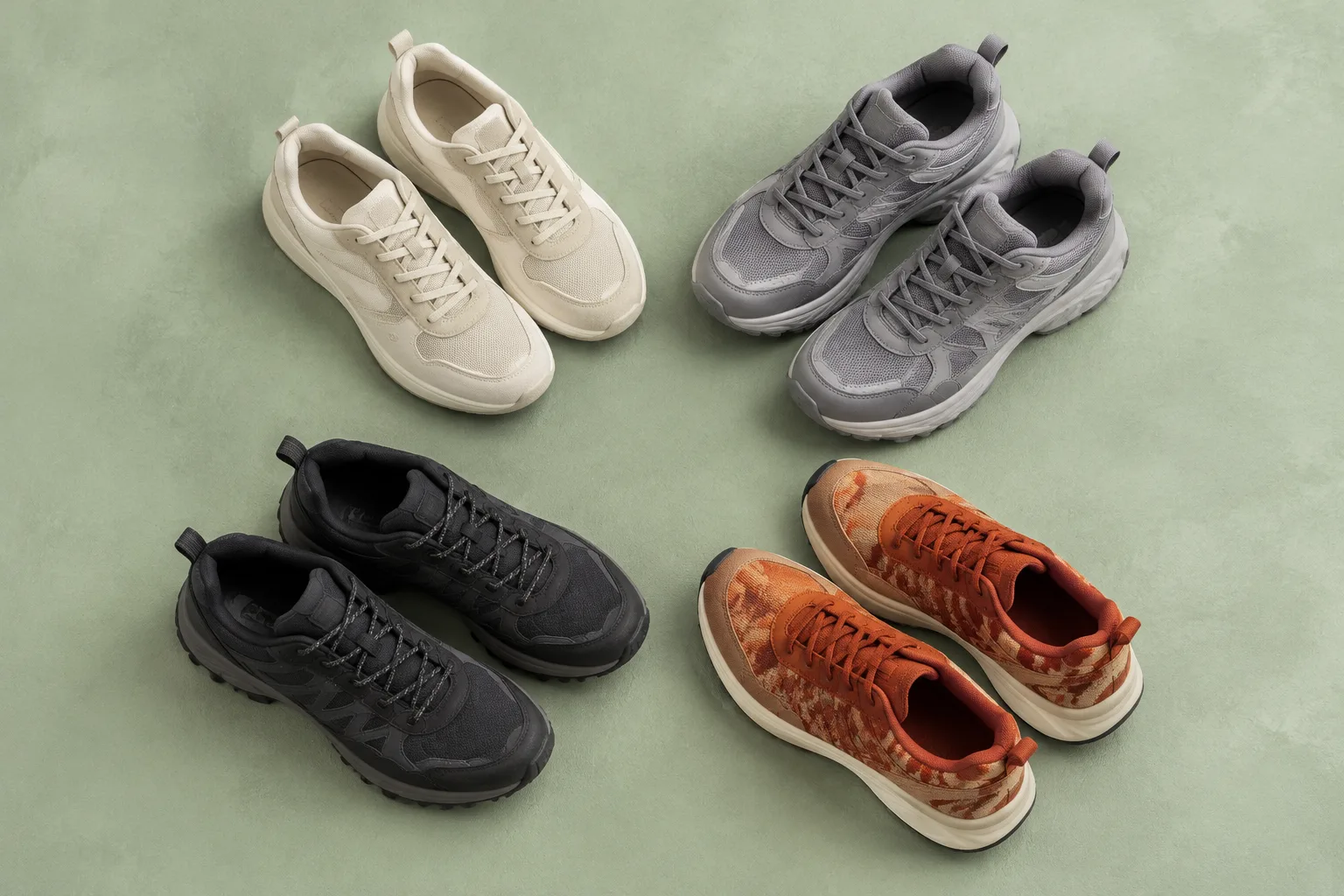
The four roles worth filling are these: a daily neutral that goes with nearly everything, a cushioned trainer for long and easy miles, a weatherproof pair for rain and cold, and one pair that does the specific job the other three cannot. That last slot is where most rotations go wrong, because people fill it with a duplicate of the daily neutral in a different color.
Pair One: The Neutral Daily That Takes the Most Wears
This is the workhorse. It should be a low-profile sneaker in white, bone, grey, or black, with a clean upper and a sole that looks appropriate under trousers and jeans alike. A canvas low-top in off-white is the safest single pair a person can own. It reads as casual without looking sloppy, and it does not announce itself in a photograph.
The daily neutral absorbs the most wears, so it should be the pair replaced most often. When the sole starts to feel thin under the ball of the foot or the heel counter collapses, the pair has done its job. A good neutral gets roughly 300 to 500 wears before it stops looking intentional. Buy the same model again rather than hunting for a replacement, because a known fit removes the guesswork.
One caution on color: white leather scuffs visibly within a month, and that is fine, because a slightly worn white sneaker looks better than a pristine one. White canvas is less forgiving. A bone or oat canvas hides the first year of wear far better and still pairs with almost everything.
Pair Two: The Cushioned Trainer for Long Days on Foot
The second pair solves a different problem: volume of steps. A cushioned running or walking shoe with a thick midsole and a rocker geometry carries a body through an eight-hour shift or a long city day. The foam matters more than the upper here. Modern supercritical foams, the kind that feel almost too soft at first, hold up better over distance than the EVA foams of a decade ago.
This pair should look like a trainer. Trying to hide a cushioned shoe as a dress sneaker produces a hybrid that does neither job. A chunky grey or black trainer worn with wide trousers and a plain tee looks deliberate. The same shoe worn with a blazer looks confused.
Rotate this pair every other day at minimum. Foam compresses under load and needs roughly 24 hours to recover its shape. Wearing the same cushioned trainer two days running accelerates the breakdown of the midsole and shortens the usable life of the shoe by a meaningful margin.
Pair Three: The Weatherproof Pair That Handles Wet Pavement
Rain, slush, and cold pavement destroy suede and canvas in a single outing. The third pair exists for those days. A leather sneaker with a sealed upper and a lugged rubber outsole handles wet weather without turning into a rubber boot. Full-grain leather, treated with a water-repellent spray once a month, sheds light rain and wipes clean.
Two details separate a real weather pair from a leather sneaker that merely looks sturdy. First, the outsole needs actual tread. A smooth leather sole on wet tile is a hazard. Second, the tongue should be gusseted or at least thick enough that water does not run straight through the lacing gap. A thin, unlined tongue on a rainy day leaves a sock soaked within twenty minutes.
Dark brown, black, or a deep olive works best here, because wet leather darkens and a pale pair will look mottled after a season of rain. The weather pair also doubles as the smart-casual option for dinners and offices with a relaxed dress code, which quietly makes it the most versatile pair in the closet after the neutral.
Pair Four: The Specific-Job Shoe the Other Three Cannot Cover
The fourth slot is the one that requires an honest look at a person's actual week. A trail runner for someone who hikes on weekends. A court shoe for someone who plays pickup basketball twice a week. A high-top for someone whose ankles roll on uneven ground. A minimal shoe for someone rebuilding foot strength. The content of this slot changes with the life, and that is the point.
What the fourth pair must never be is a second version of pair one. A closet with two white canvas low-tops is a closet with three pairs and a spare. The fourth pair earns its place by doing something the first three cannot, and if no such job exists in a person's week, then three pairs is the honest answer.
There is a test for whether the fourth pair is pulling its weight. Count the wears over a month. If the specific-job shoe has been out fewer than four times, the job is theoretical. Either the activity is not real, or the shoe is wrong for it. Either way, the slot is wasted.
Why Four Pairs Beat Five or Two
Two pairs forces constant wear on both, which compresses foam and shortens life. Five pairs lets one or two pairs sit unworn for months, and unworn shoes crack at the midsole and stiffen at the leather. Four pairs, worn in rotation, gives each shoe roughly two days of rest between outings, which is the recovery window foam and leather both need.
Four also forces a decision. When a person owns fifteen pairs, each one is a compromise, and the daily choice becomes a small negotiation. Four pairs with clear roles means no negotiation: the weather decides, the day's distance decides, the outfit decides. The closet becomes a set of tools rather than a collection.
The Care Schedule That Keeps Four Pairs Alive
Shoes last roughly twice as long when they are allowed to dry fully between wears, and cedar shoe trees speed that drying by absorbing moisture from the inside. A pair of trees in each shoe, rotated in after every wear, is the single highest-return purchase in the whole system. The trees cost less than a single replacement pair and extend the life of all four.
Canvas pairs get a brush and a mild soap solution once a month. Leather pairs get a damp cloth and a conditioner every six to eight weeks. Cushioned trainers get nothing except air and time, because most foams degrade faster when soaked. None of this takes more than twenty minutes a month across all four pairs.
One more scheduling note: wash the laces. A pair of white laces gone grey makes an otherwise clean sneaker look neglected, and replacement laces cost almost nothing. Swap them every few months and the whole closet reads sharper for it.
How the Four Pairs Split Across a Real Week
Monday through Wednesday, the neutral daily handles the office or the school run. Thursday, the cushioned trainer takes the long walk or the errand-heavy day. Friday, if rain is in the forecast, the weather pair takes over. Saturday, the specific-job shoe comes out for the trail, the court, or whatever the weekend holds. Sunday, everything rests, and the trees do their work.
That is a week of wear with roughly two days of rest per pair, which is the pattern that keeps four pairs going for two to three years before any of them needs replacing. The math is not exact, and a heavy walker will burn through the trainer faster than a desk worker. But the shape of the week holds.
The one adjustment worth making is seasonal. In summer, the neutral and the specific-job shoe carry most of the load. In winter, the weather pair and the trainer do. The rotation shifts, and the pairs that sit out get cleaned and stored with trees so they come back in spring ready to work.
When to Replace a Pair, and Which One Goes First
The neutral daily goes first, usually around the two-year mark, because it absorbs the most wears. The cushioned trainer goes second, when the foam stops springing back or the outsole rubber wears through at the heel. The weather pair can survive four or five years with care, and the specific-job shoe lasts as long as the activity does.
The signal to replace is physical, not cosmetic. A sneaker is done when the midsole has lost its rebound, when the heel counter no longer holds the foot, or when the outsole has worn through to the midsole foam. Scuffs and creases are not signals. A pair with a clean, structured upper and a dead midsole will hurt a foot on a long walk, and that is the moment to retire it.
Replacing one pair at a time, rather than all four together, keeps the rotation intact and spreads the cost. The new pair goes into the slot the old one filled, and the cycle continues. Four pairs, four roles, one at a time. That is the whole system, and it holds for years.