

Fabric First: The Athleisure Textiles That Hold Their Shape
Cotton jersey is the fabric that taught a generation to expect disappointment. A gym shirt made from it feels wonderful on the first wear, soft and loose and cool against the skin, and then a few washes later the hem has curled and the shoulders have widened into a soft triangle and the whole thing has settled into a shape that resembles the wearer only faintly. The athleisure market learned this lesson slowly and then all at once. The textiles that hold their shape through a hundred cycles are engineered, not grown, and the difference shows up in the mirror long after the price tag has been forgotten.
Shape retention is a material property with a measurable basis. A knit fabric recovers when its fibers have enough elastic character to spring back after stretching, and when the yarn structure itself resists the slow creep that turns a fitted waistband into a loose one. Two things do the heavy lifting: the polymer chemistry of the fiber and the way the yarn is spun, knit, and finished. Understanding both explains why a $28 pair of leggings can outlast a $120 pair, and why some expensive pieces go slack within a season.
Elastane Percentage Is a Starting Point, Not a Verdict
Labels advertise elastane content the way cereal boxes advertise protein. Four percent, eight percent, twelve percent. A higher number usually means more stretch, but stretch and recovery are different animals. A fabric with 20 percent elastane can still bag at the knee if the base yarn is weak or the knit is loose. The elastane gives the fabric room to move; the surrounding fibers have to pull it back. A pair of leggings with 6 percent elastane knit densely from a fine nylon yarn will hold its silhouette better than a pair with 15 percent elastane knit from a thick, airy spun yarn.
This is where the marketing gets sloppy. Brands love to lead with a big elastane figure because it sounds technical, and shoppers have been trained to read it as a quality signal. The fiber blend on the care label tells a more complete story. Nylon and polyester, both synthetic, bring dimensional stability that cotton and rayon cannot match. A blend of nylon and elastane, knit tightly, sits at the top of the shape-retention hierarchy. A cotton-elastane blend, however comfortable, lives a few rungs down, because cotton fibers are short, absorbent, and prone to stretching out under sustained load. The elastane helps, but it cannot rescue a fiber that wants to relax.
Interlock and Rib Knits Make the Difference at the Waistband
The waistband is where most athleisure fails first. A single jersey knit, the standard for cheap activewear, is a thin, single-faced fabric with stretch in one direction and little structural memory. An interlock knit, by contrast, is a double-knit structure with two interlocking faces, which gives it more body, better recovery, and a smoother surface. A rib knit, with its alternating raised and recessed columns, has natural vertical elasticity and a built-in spring-back mechanism that resists rolling and folding.
Run a thumb across the inside of a waistband. If the fabric feels thin and smooth with no visible structure, it will likely fold over within a few wears. If there is a visible ribbed texture, even a fine one, the band has a mechanical advantage. A wide, flat waistband cut from an interlock or a dense rib holds its position because the knit structure distributes tension across the whole band instead of concentrating it at the seam. That is why a 3-inch interlock waistband outperforms a 1-inch elastic band, and why the best leggings on the market have moved toward wide, structured bands with bonded or flatlock seams rather than simple elastic casings.
The Compression Question and What It Actually Means for Fit
Compression is a term thrown around with almost no regulation. True compression garments, the kind used in medical settings, are graded and measured in millimeters of mercury. Athletic compression wear uses the word loosely to describe fabric that fits tightly and applies pressure. The shape-retention benefit of compression fabric comes from the density of the knit and the tension built into the pattern, which keeps the fabric under constant slight strain so it never fully relaxes.
A compression legging that fits well on day one will feel tighter on day thirty if the fabric has good recovery, because the elastane is still working. A compression legging with poor recovery will feel progressively looser, and the wearer will start tugging at the waistband during workouts. The distinction matters for shoppers: a garment that feels almost too tight in the fitting room, made from a dense nylon-elastane interlock, is likely to settle into the right fit and stay there. A garment that feels perfect and soft in the store, made from a loose cotton blend, will be a size too big within a month. That is the counterintuitive rule of shape-retaining athleisure, and it runs against every instinct a shopper brings from buying jeans or dresses.
Seams, Bonding, and the Places Fabric Gives Way
Fabric is only half the story. A garment fails at its seams before it fails in the middle of a panel. Flatlock seams, which join two fabric edges without a raised overlap, distribute stress evenly and move with the fabric. Overlock seams, the standard on inexpensive activewear, create a bulkier join that can pucker and pull. Bonded seams, which use adhesive tape instead of thread, eliminate the stitch line entirely and are common in higher-end leggings, though the bond can fail after repeated hot washes.
Look at the crotch gusset on a pair of leggings. A diamond-shaped or triangular gusset made from the same fabric as the body, with flatlock seams, is a sign of serious construction. A simple seam running straight down the center is a cost-saving shortcut that concentrates stress at the point of highest movement and is usually the first place a pair of leggings splits. The gusset is a small detail that tells a shopper more about the manufacturer's priorities than any hangtag claim about four-way stretch.
Why Washing Turns Good Fabric Bad
Heat is the enemy of elastane. The polymer chains that give the fiber its spring degrade under repeated exposure to hot water and high dryer temperatures, and once they go, the fabric cannot recover. A pair of leggings washed in cold water and hung to dry will outlast an identical pair washed warm and tumble-dried by a wide margin. This is not a subtle effect. It is the single biggest variable a wearer controls, and it is the one most people ignore because the care label is printed in tiny type on a tag that gets cut off.
Fabric softeners compound the problem. They coat fibers with a waxy film that reduces the friction between yarns, which sounds pleasant but actually undermines the mechanical grip that helps a knit recover its shape. Over time, a softener-treated garment feels slicker and stretches more readily. Detergent residue does similar damage. The practical rule is simple: cold water, a small amount of gentle detergent, no softener, and air drying. A garment treated this way will hold its shape for years rather than months.
The Price-Quality Gap in Real Numbers
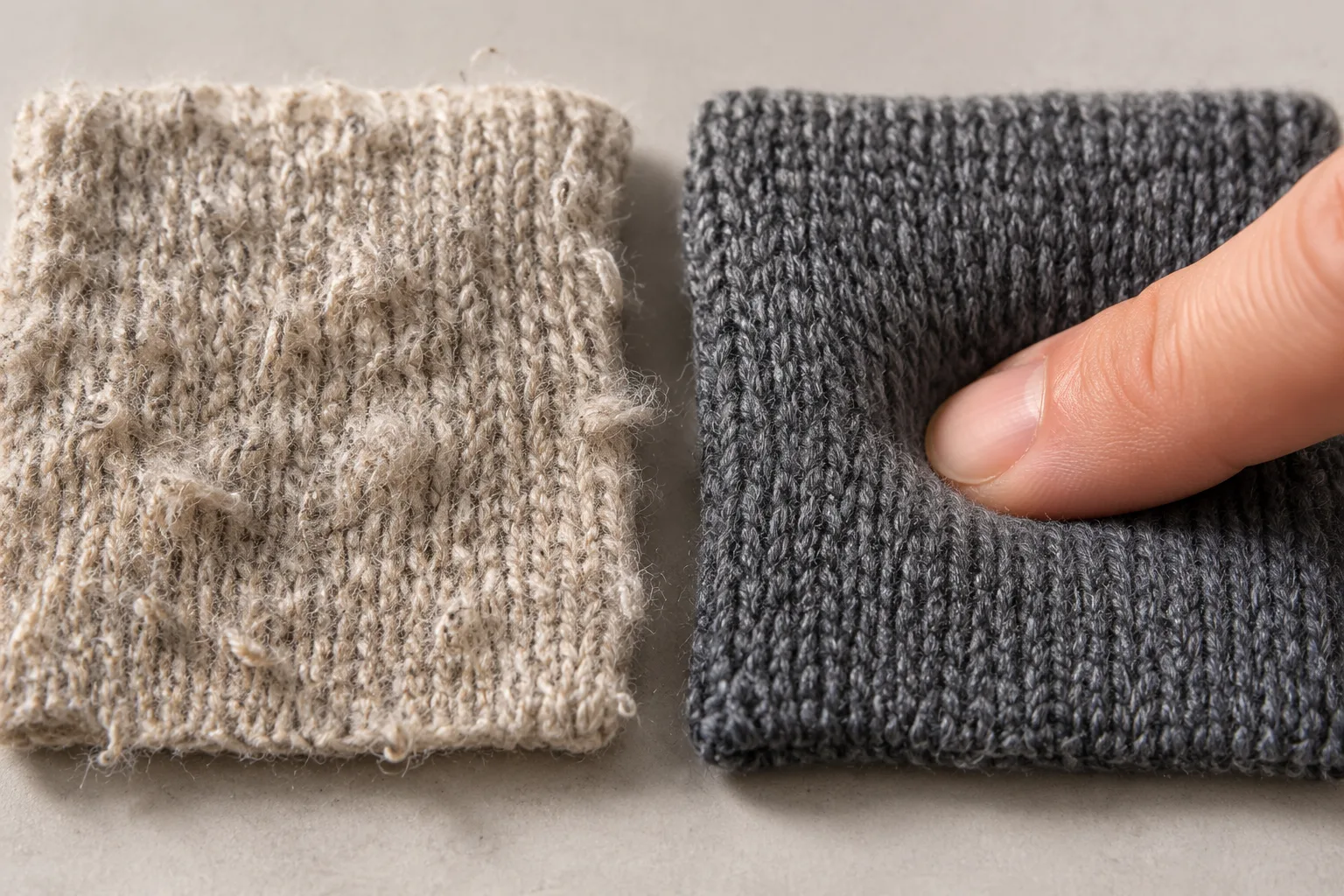
A shopper can spend $25 or $125 on a pair of leggings and get remarkably similar fabric in some cases. The expensive pair often wins on pattern-making, seam construction, and quality control, but the fabric itself is frequently the same nylon-elastane interlock sourced from the same handful of mills. The premium is real in some cases and mostly branding in others. The reliable way to tell the difference is to handle the garment: stretch a section of fabric and release it, then watch how quickly it returns. A good fabric snaps back immediately. A poor one returns slowly or not at all. That test takes two seconds and tells more than any price tag.
There is also a sustainability angle that gets overlooked. A garment that holds its shape for five years replaces five garments that fail in a year, and the environmental math favors the durable option even if the fabric is synthetic. The athleisure industry has a shape-retention problem that is really a disposable-design problem, and the fix starts with the textiles rather than the marketing. A shopper who learns to read a care label, feel a knit, and test a stretch is better equipped than any review site.
The One Fabric Worth Seeking Out
If a single textile deserves the label of best-in-class for shape retention, it is a dense nylon-elastane interlock with a flatlock-seamed gusset and a wide ribbed waistband. It is not the softest fabric on the shelf, and it will not feel luxurious against the skin the way a brushed cotton blend does. It will, however, look the same after a year of regular wear as it did on the day it was bought, and that is the entire point. Athleisure earned its place in daily wardrobes because it promised comfort without compromise. The textiles that hold their shape are the ones that keep that promise, and the ones that do not are the reason so many drawers are full of leggings that no longer fit anyone.