
From Locker to Lunch: Duffels That Pass as Day Bags
A duffel bag has a reputation problem. The word itself conjures gym class, or an airport carousel, or a canvas tube with a team logo and a broken zipper. Somewhere along the way it became the bag nobody wants to carry anywhere that matters, the thing that gets shoved in a closet until the next trip. That reputation is mostly undeserved, but it is also not an accident. Most duffels are built for one job, hauling equipment from point A to point B, and they look it. The handles are too long, the fabric is too loud, the shape is too round, and the straps hang off the sides like loose shoelaces.
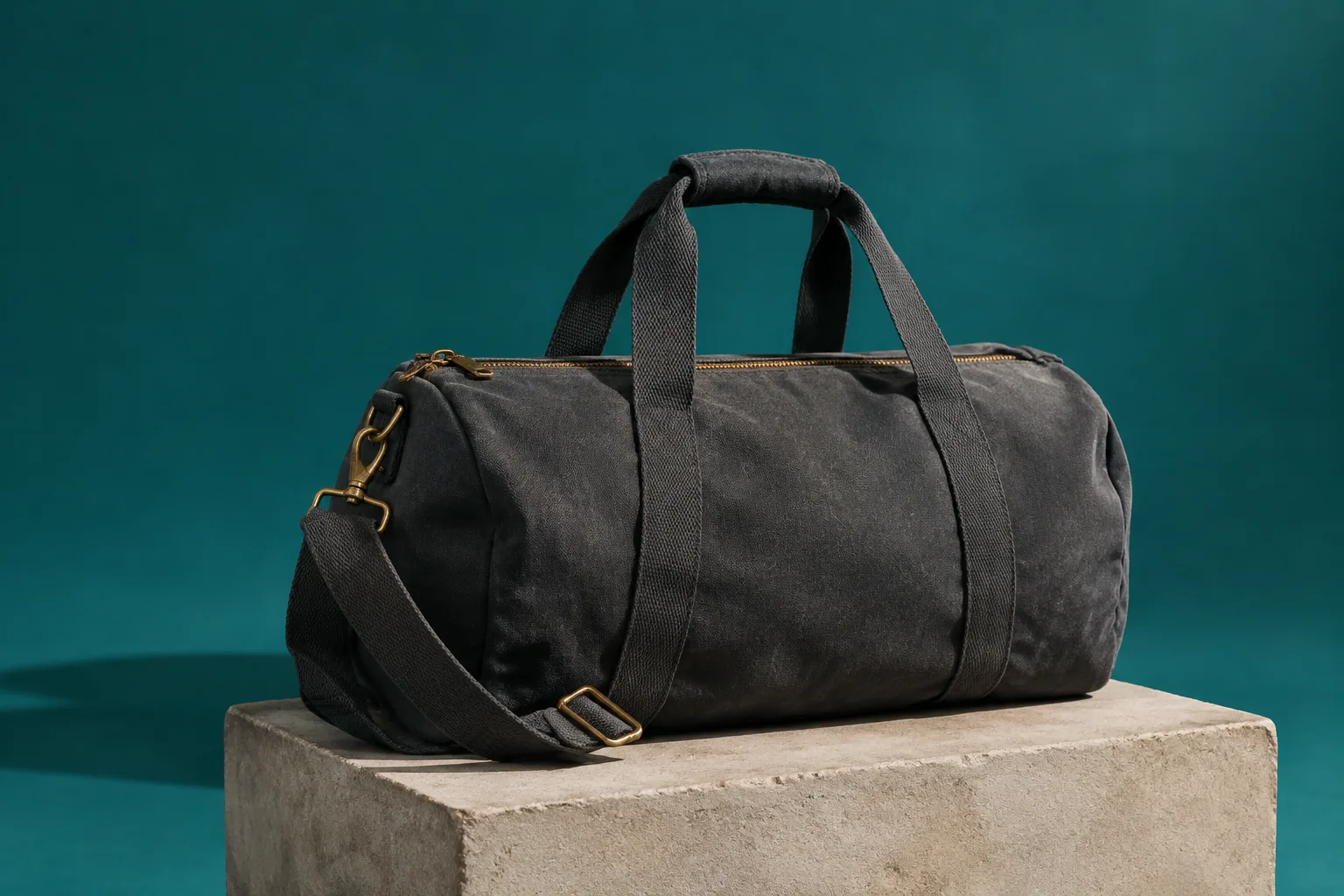
There is a narrow category of duffel that escapes this. It sits somewhere between a weekend travel bag and a tote, with clean lines, a flatter profile, and hardware that does not announce itself. Tossed over a shoulder on a Tuesday morning, it reads as a day bag. Nobody assumes there is a wet towel inside.
Finding one takes a little work, because the category does not have a clean name. Brands call these things "weekenders," "carryalls," "barrel bags," or "sports totes," and the details that separate a good one from a bad one are not the details the marketing copy talks about. What follows is a working set of criteria, built from carrying a lot of these bags on subways, into offices, and through the kind of weekend that starts on a Friday evening and ends with a Sunday hangover.
The first thing that betrays a duffel is the handle drop
Duffel handles are designed for a hand, and that is the problem. A short pair of handles that meets over the top of the bag forces the arm down and the elbow out. The bag swings at hip level and reads as cargo. The fix is a handle long enough to reach the shoulder, or a detachable shoulder strap with a proper pad. Anything under about 20 inches of handle drop will not sit comfortably on a shoulder, and the bag will spend the morning in a hand.
Long handles also change the silhouette. A bag carried close to the body on a shoulder looks smaller and more deliberate than the same bag dangling from a fist. This is the single highest-leverage detail in the entire category, and it is almost never mentioned on a product page.
Flatter profiles read as day bags; round ones do not
The classic duffel is a cylinder, and a cylinder is the least flattering shape a bag can take. It bulges outward at the middle, sags when half full, and looks empty even when it is stuffed. A flatter profile, closer to a rectangular box with softened corners, holds its shape when partially loaded and sits against the hip without rolling away.
Look for a bag with a structured base panel. That one panel is the difference between a bag that stands up on the floor of a train car and one that collapses into a puddle of canvas. Base structure also means the bag can be set down without the contents shifting, which matters when the contents include a laptop in a sleeve.
Depth matters too. Anything deeper than about 10 inches starts to feel like luggage, and the wearer's arm brushes against it with every step. A day bag should sit close to the body, roughly the depth of a thick book.
Hardware and branding decide whether it passes at a lunch table
A duffel with a big logo across the side is a gym bag no matter how well it is made. The branding problem is not about taste. It is about context. A bag that announces its brand is a bag that announces its purpose, and a bag with a team name or a sportswear logo announces a purpose that has nothing to do with lunch.
Hardware is the quieter signal. Chunky plastic clips, reflective webbing, and mesh side pockets read as athletic. Brass or matte metal hardware, leather or canvas tabs, and a simple zip pull read as something a person chose deliberately. The zipper itself matters. A bag with a covered zipper, sometimes called a storm flap, looks more finished than one with an exposed coil running along the top.
The same logic applies to the interior. A duffel with a bright synthetic lining and a shoe compartment looks like it belongs in a locker room. A bag with a neutral lining and one small zip pocket looks like it belongs on a chair next to a desk.
The shoe compartment is the tell
Almost every duffel sold as a gym bag has a ventilated shoe compartment at one end. That compartment exists for a good reason, and it is also the most reliable sign that the bag is not going to pass as a day bag. The compartment adds bulk, usually creates a visible bump at the end of the bag, and often comes with a mesh panel that says "athletic" from across the room.
A bag that can carry a change of clothes and a pair of shoes without advertising it is a better bag. Some flat-profile duffels handle this with a simple internal sleeve or a separate stuff sack, which keeps the exterior clean and the interior organized. The trade-off is a little less convenience, and it is worth it.
Materials that survive a commute and still look intentional
Heavy cotton canvas is the default for a reason. It wears in rather than out, it holds a shape, and it takes a patch or a repair without looking damaged. A 16 to 20 ounce canvas will stand up to years of daily use, and the surface softens in a way that reads as character rather than wear.
Nylon and polyester are lighter and more water-resistant, and a matte ballistic nylon can look sharp, but the sheen on cheaper synthetic fabrics is a giveaway. Anything with a visible shine reads as a gym bag. Leather is the other end of the spectrum, and a full-grain leather duffel in a muted color will pass anywhere, at a price that reflects it.
The lining deserves a mention. A bag lined in a dark, tightly woven fabric hides stains and does not crinkle. A bag lined in a thin, bright synthetic shows every scuff and announces its price point.
Color is doing more work than most people realize
Black is the safest choice and the most boring one. It also reads slightly formal, which can work in a bag's favor. Olive, tan, charcoal, and a deep navy all sit in the same register, neutral enough to go with a coat and a pair of jeans without looking like a piece of equipment.
What kills the day-bag illusion is contrast. A bag with a bright red zip, a neon pull tab, or a white logo on a black body draws the eye to the details that mark it as sportswear. Monochrome bags, or bags with tonal hardware, disappear into an outfit in the way a good tote does. The goal is for the bag to be noticed only if someone is looking for it.
What a duffel still cannot do
A duffel, even a good one, will never carry a laptop as well as a backpack or a briefcase. The shape does not distribute weight across the back, and a shoulder strap puts all the load on one side. A 15-inch laptop plus a charger plus a water bottle is about the limit before the bag starts to pull, and even at that weight the strap will dig in by the end of a long walk.
This is the honest boundary of the category. A flat-profile duffel works for a day that involves a change of clothes, a lunch, a notebook, and maybe a tablet. It does not replace a commuter bag for anyone carrying a full work setup every day. The people who make it work are the ones who treat it as a second bag, a thing that lives in the car or the office and gets picked up for the specific kind of day it suits.
The bag that gets carried is the one that gets used
The most useful test for any duffel is not a spec sheet. It is a Tuesday. Does the bag get picked up on the way out the door, or does it stay on the hook while a tote gets grabbed instead? The bags that pass are the ones with a handle that reaches the shoulder, a profile that sits flat against the hip, and a surface that does not shout. Everything else is a gym bag with a nicer price tag.
A person who has carried the same flat canvas duffel for three years, patched at one corner, strap softened by use, is carrying a bag that has stopped being a duffel in anyone's mind. It has become the bag. That is the whole trick, and it has almost nothing to do with the label sewn inside.