

Performance or Cotton? Two Tees, Two Outcomes
Two identical-looking short-sleeve shirts hang side by side on a rack, both labeled size medium, both cut from a soft knit that photographs like cotton. One costs eighteen dollars. The other costs seventy-five. The label on the cheaper one reads "100% cotton." The label on the expensive one reads "94% polyester, 6% elastane." Most shoppers would assume the expensive shirt is the ripoff and the cheap one is the honest deal. That assumption gets the entire question backwards, and the reason has less to do with price than with what each fiber does once it meets a human body in August.
The gap between a performance tee and a cotton tee is not a marketing distinction. It is a difference in physics, and the physics shows up on the skin long before it shows up on a receipt.
What Each Fiber Actually Does With Sweat
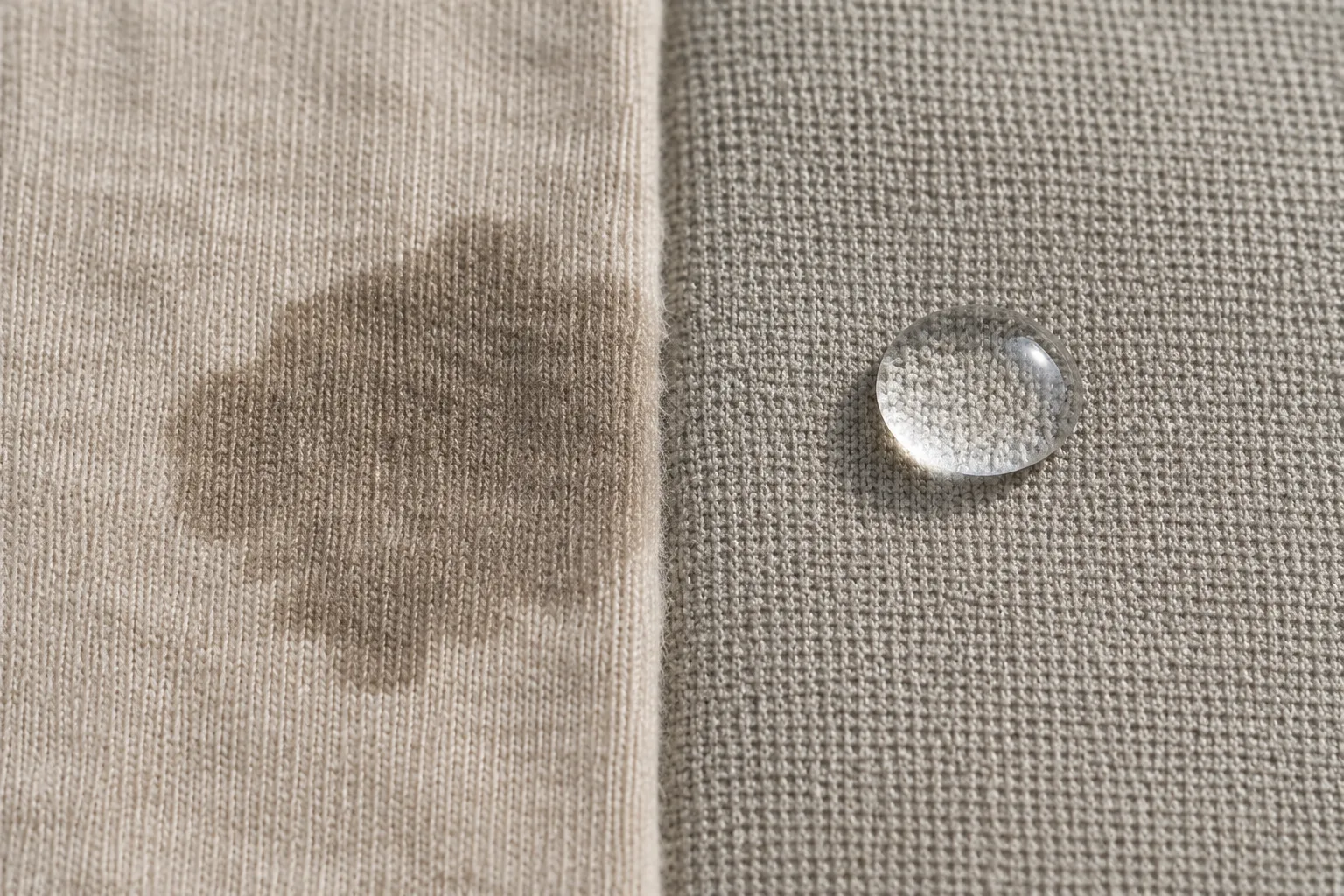
Cotton is a plant fiber built largely of cellulose, and cellulose loves water. A cotton thread will drink moisture and hold it, swelling slightly as it does. That is why a cotton towel works and why a cotton tee feels cool and soft against dry skin. It is also why a cotton tee becomes a wet, heavy rag the moment a person sweats through it.
Polyester is a plastic fiber. It does not absorb water in any meaningful way. Instead, manufacturers engineer the thread itself, changing its cross-section from a solid rod into shapes with channels and grooves, so moisture gets pulled along the surface of the fabric and spread out to evaporate. The sweat does not soak in; it wicks and dries. That is the entire trick, and it works.
A cotton shirt after a hard commute holds a puddle against the back. A performance shirt moves that moisture outward and lets it go. In a hot car or a crowded train, that single difference is the whole ballgame.
The Smell Problem Nobody Warns About
Here is where the story turns ugly for polyester, and it turns ugly fast. The same plastic surface that refuses to absorb water also refuses to release the oils and bacteria that cause body odor. Cotton, for all its heaviness when wet, traps odor compounds loosely enough that a normal wash lifts them out. Polyester traps them in the fiber's microscopic crevices, and ordinary detergent often cannot reach them.
Anyone who has owned a performance tee for a few months knows the smell. It does not stink fresh out of the dryer. It stinks fifteen minutes into a workout, when body heat reactivates the trapped compounds. The shirt seems to wake up and turn on its owner. A cotton tee that smells bad can usually be rescued. A polyester tee that has gone sour often cannot, and the only fix is replacement.
This is the central trade of the performance tee, and it is worth stating plainly: it keeps a person dry and it will eventually stink in a way cotton rarely does.
Why the Cheap Cotton Shirt Feels Better at First
Cotton wins the first five minutes every time. It is softer, it drapes better, it breathes in still air, and it does not have the faint plasticky sheen that cheap polyester carries. A plain cotton tee looks like clothing. A cheap performance tee looks like athletic wear pretending to be clothing.
That first impression is real and it matters. For a dinner out, a plane ride in mild weather, or a day at a desk, cotton is the more comfortable choice and there is no performance benefit worth chasing. The mistake is assuming that first impression predicts the whole day.
Cotton also ages honestly. It fades, it softens, it develops a worn-in quality that some people prefer to new. Polyester ages by pilling and by holding onto its stink. A three-year-old cotton tee and a three-year-old performance tee look like they have lived very different lives.
The Price Gap Is Not About the Fabric Alone
The seventy-five dollar performance tee is not expensive because polyester costs more. Polyester is cheap. The price comes from engineering: the fiber cross-section, the knit structure, the finishes, and the design work that makes a synthetic shirt fit and feel like something other than a gym rag. A well-made performance tee uses a fabric that cost real money to develop, and the seams and cut usually reflect that.
The eighteen dollar cotton tee is cheap because cotton is cheap to grow, cheap to spin, and cheap to sew into a basic tube with sleeves. There is nothing wrong with that. It is one of the great bargains in clothing. But the price difference between the two shirts is mostly a difference in engineering ambition, not a difference in honesty.
Where Cotton Quietly Fails
The cotton tee's weakness is not subtle. It is a sponge. On a humid day, it holds sweat against the skin and stops the body's own cooling from working, because evaporation cannot happen through a soaked layer. The wearer ends up hotter and wetter than if they had worn nothing at all.
There is a second failure that rarely gets mentioned: cotton takes forever to dry. A soaked cotton tee stays damp for a long time, which is uncomfortable on a long trip and genuinely unpleasant on a cold evening after exercise. A performance tee dries in minutes. That speed is the quiet luxury of the synthetic shirt, and it is easy to underestimate until a person is standing in a wet cotton tee on a chilly platform.
The Blends That Try to Have It Both Ways
Most shirts sold today are neither pure cotton nor pure polyester. They are blends, usually cotton mixed with a small percentage of polyester or elastane. The cotton provides softness and the honest aging; the synthetic provides stretch and a bit of moisture movement. A 60/40 cotton-poly blend is a reasonable compromise for casual wear, and it will not stink the way pure polyester does because the cotton content gives odor a place to escape.
The blend also hides the weaknesses of both. It will not wick like a dedicated performance fabric, and it will not breathe like pure cotton. It is the middle path, and for a lot of everyday wear the middle path is fine. The problem is that blends are often sold as if they carry the strengths of both fibers at full strength, which they do not.
A Merino Exception Worth Naming
There is a third option that sidesteps the whole cotton-versus-polyester fight, and it deserves a mention because it is the one fiber that genuinely does both jobs. Merino wool wicks moisture, regulates temperature, and resists odor in a way neither cotton nor polyester can match. It is also expensive and delicate, and it feels different against the skin than either of the other two.
Merino is not a universal answer. It pills, it needs careful washing, and a cheap merino tee is usually a bad one. But for travel and for anyone who sweats a lot and hates the polyester stink, it is the quiet third path that the two-tee comparison tends to leave out.
How to Choose Without Overthinking It
The decision comes down to the day the shirt will have. A person who spends the day at a desk, in mild weather, or out to dinner should buy cotton and enjoy it. A person who will sweat, commute in heat, exercise, or travel through humid places should buy performance fabric and accept that it will eventually smell.
The mistake is buying one shirt and expecting it to do both jobs. A cotton tee worn to the gym is a wet rag. A performance tee worn to a nice dinner looks like athletic wear at a funeral. The fibers have personalities, and the smart move is to match the personality to the occasion rather than to force one shirt into every role.
There is also a maintenance rule that saves performance shirts from an early death. Wash them in cold water, skip the fabric softener, and let them air dry. Fabric softener coats the fibers and clogs the very channels that make wicking work. A performance tee washed with softener is a performance tee that has been quietly disabled.
The Drawer That Tells the Truth
Look at the drawer of anyone who has owned both kinds of shirts for a year. The cotton tees will be faded, soft, and still in rotation. The performance tees will be split into two piles: the ones still worn for exercise, and the ones that went sour and got demoted to yard work or thrown out.
That drawer is the honest review. Neither shirt is a scam. Each one is a set of trade-offs, and the person who understands the trade-offs stops expecting a single tee to be both cool and dry, soft and stink-free, cheap and engineered. The eighteen dollar cotton shirt and the seventy-five dollar performance shirt are both doing exactly what their fibers promise. The only real question is which promise the day requires.