

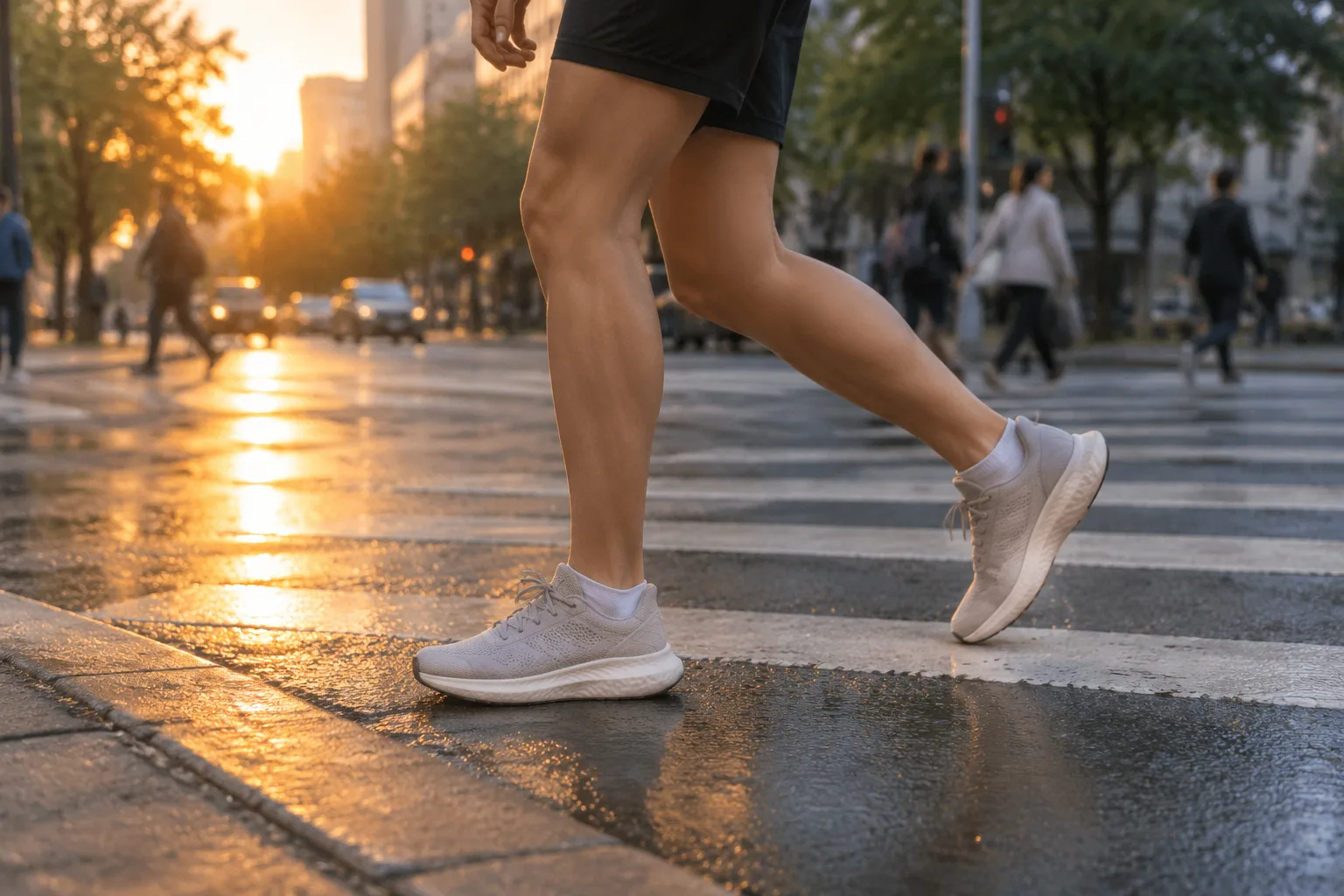
Run Club Meets Street: Running Shoes Versus Lifestyle Sneakers
A running shoe and a lifestyle sneaker can look nearly identical on a shelf. Both have a knit or mesh upper, a foam midsole, a rubber outsole, a swoosh or a stripe or three parallel bars. The colors are the same. The silhouette is the same. Then a person walks twenty blocks in one and twenty in the other and discovers the gap between them is not subtle. Run club and street style have been borrowing from each other for years, and the result is a gray zone where shoes are sold as do-everything objects when they were engineered for one thing only.
The distinction matters more now than it did a decade ago because the two categories have physically converged. Running brands release lifestyle colorways of their performance models. Lifestyle brands add foam midsoles that look like running tech. The buyer is left to guess which shoe can survive a commute and which will fall apart by the third month of pavement.
What a running shoe is actually built to do
A running shoe is designed around a forward motion that repeats thousands of times per hour. The heel strikes, the foot rolls, the toe pushes off. Every component serves that cycle. The foam is soft enough to absorb impact and resilient enough to spring back, because a midsole that packs out after a few hundred miles stops doing its job. The upper is lightweight and breathable so the foot does not cook at mile eight.
That lightweight upper is the first thing to notice. A running shoe upper is often a single engineered mesh, thin as a shirt, with minimal overlays. It prioritizes ventilation and low weight over abrasion resistance. It is not built to be scuffed against a curb, dragged across a bus floor, or stuffed under a desk for a year.
The midsole is the second. Running foams are tuned for a specific gait and a specific body weight. They are compression-molded to a shape that assumes the foot landing in a particular way. A neutral runner and a stability runner are different tools. Neither was engineered to be stood in for six hours at a concert.
What a lifestyle sneaker sacrifices for durability
A lifestyle sneaker starts from the opposite assumption. It assumes the foot will be in it for hours, often stationary, often on hard indoor floors, and sometimes outdoors on wet sidewalks. The upper is usually leather, suede, canvas, or a thicker knit with structural overlays. It is heavier and less breathable, and it survives glancing contact with the world.
The midsole on a lifestyle shoe is typically firmer and flatter. That is not a failure of engineering. A firm midsole provides a stable platform for standing, and it does not compress into a pancake under prolonged load the way a soft running foam does. The outsole is often a flat rubber sheet with a shallow pattern, which grips pavement well enough and wears slowly.
The trade-off is weight and breathability. A lifestyle sneaker will feel clunky next to a running shoe. It will also outlast one on the street by a wide margin, because it was never asked to be featherweight.
The foam problem nobody mentions at the register
Soft foam is a consumable. The same property that makes a running midsole feel plush on day one, the ability to compress and rebound, is the property that degrades with use. A running shoe used daily as a walking shoe will lose its cushioning faster than it would if it were only run in, because walking involves more total hours of load and more lateral shear.
A person who buys a running shoe for street wear often notices the change around month four or five. The heel feels flatter. The shoe feels wider and sloppier. The upper has stretched. The shoe is not defective. It has simply been used outside its design envelope.
A lifestyle sneaker's firmer midsole degrades too, but slowly and less dramatically. The foam compresses at a rate measured over years, not months, because it was formulated for lower cycle counts and higher standing loads.
Where the upper fails first on city pavement
The upper is usually the first visible casualty. A thin engineered mesh running upper has almost no abrasion resistance. It tears at the toe box from repeated scuffs. It frays at the collar where it rubs against a pant hem or a sock. It stains instantly and permanently because the fibers are porous and there is no protective coating.
Walk through any downtown at rush hour and the evidence is on people's feet. The running shoes that look sharp in product photography look tired after a season of real city wear. The lifestyle sneakers look scuffed but intact, because leather and suede and heavy canvas take a beating and keep their shape.
That is the quiet cost of treating a running shoe as a street shoe. The shoe does not fail dramatically. It just begins to look and feel cheap far sooner than the buyer expected.
Why run clubs drift into lifestyle colorways
Run clubs have become social spaces. A Saturday morning group run ends at a coffee shop, and the shoe that carried a person through five miles is now the shoe they are standing in for an hour afterward. This is where the categories blur. Runners want a shoe that performs on the run and does not look absurd at brunch. Brands have responded by softening the visual language of performance shoes and adding lifestyle-friendly colorways.
The compromise is real but limited. A performance shoe can be styled for the street. It cannot be restructured for street durability without losing what made it a performance shoe. The upper stays thin. The foam stays soft. The shoe still has a service life measured in months of daily wear.
This is why serious runners often keep two pairs. One for training, replaced on a mileage schedule. One for the rest of life, chosen for how it holds up rather than how it feels at mile six.
The standing test that separates the two
There is a crude field test. Stand in the shoe on a hard floor for ten minutes without walking. A lifestyle sneaker distributes weight across a firm platform and the foot stays comfortable. A soft running shoe, under static load, compresses at the heel and forefoot and begins to feel unstable. The foot rocks slightly. The arch has nothing solid beneath it.
Walking is a different test. Walk a mile on pavement in each. The running shoe feels light and springy for the first half mile and then the foam begins to feel vague. The lifestyle shoe feels heavier from the first step and identical at the end of the mile. That consistency is the point.
Neither result is a defect. Each shoe is answering a different question. The mistake is buying one and expecting the answer to the other.
What the outsole pattern reveals about intended use
Flip a running shoe over and the outsole usually shows a segmented pattern with exposed foam between rubber pods. The rubber is placed only where the foot strikes, because extra rubber is extra weight. The exposed foam is lighter and more flexible and wears quickly on abrasive surfaces.
A lifestyle sneaker typically has a fuller rubber outsole with a shallow, uniform tread. It is heavier and it lasts longer. The pattern is designed for grip on smooth indoor floors and moderate outdoor surfaces, and it does not need to flex the way a running outsole does.
The outsole is the clearest tell. A shoe with exposed foam on the bottom was built for a surface that is soft and a lifespan that is short by design.
The rotation that actually works
The practical arrangement for anyone who runs and also lives in a city is a two-shoe rotation, and it is not expensive if chosen deliberately. Keep one running shoe dedicated to running, replaced when the midsole loses resilience, which for most people happens somewhere between three hundred and five hundred miles depending on weight and gait. Keep one lifestyle sneaker for everything else, chosen for a firm midsole and a durable upper.
The running shoe never touches a sidewalk for errands. The lifestyle sneaker never touches a running trail. Each stays inside its design envelope, and both last longer as a result.
The alternative, one shoe for everything, produces the exact outcome the categories predict: a shoe that is mediocre at running and falls apart on the street, replaced twice as often as it should be. The convergence of run club and street style is real, and it is fine as a look. As a purchase decision, it is a trap.