

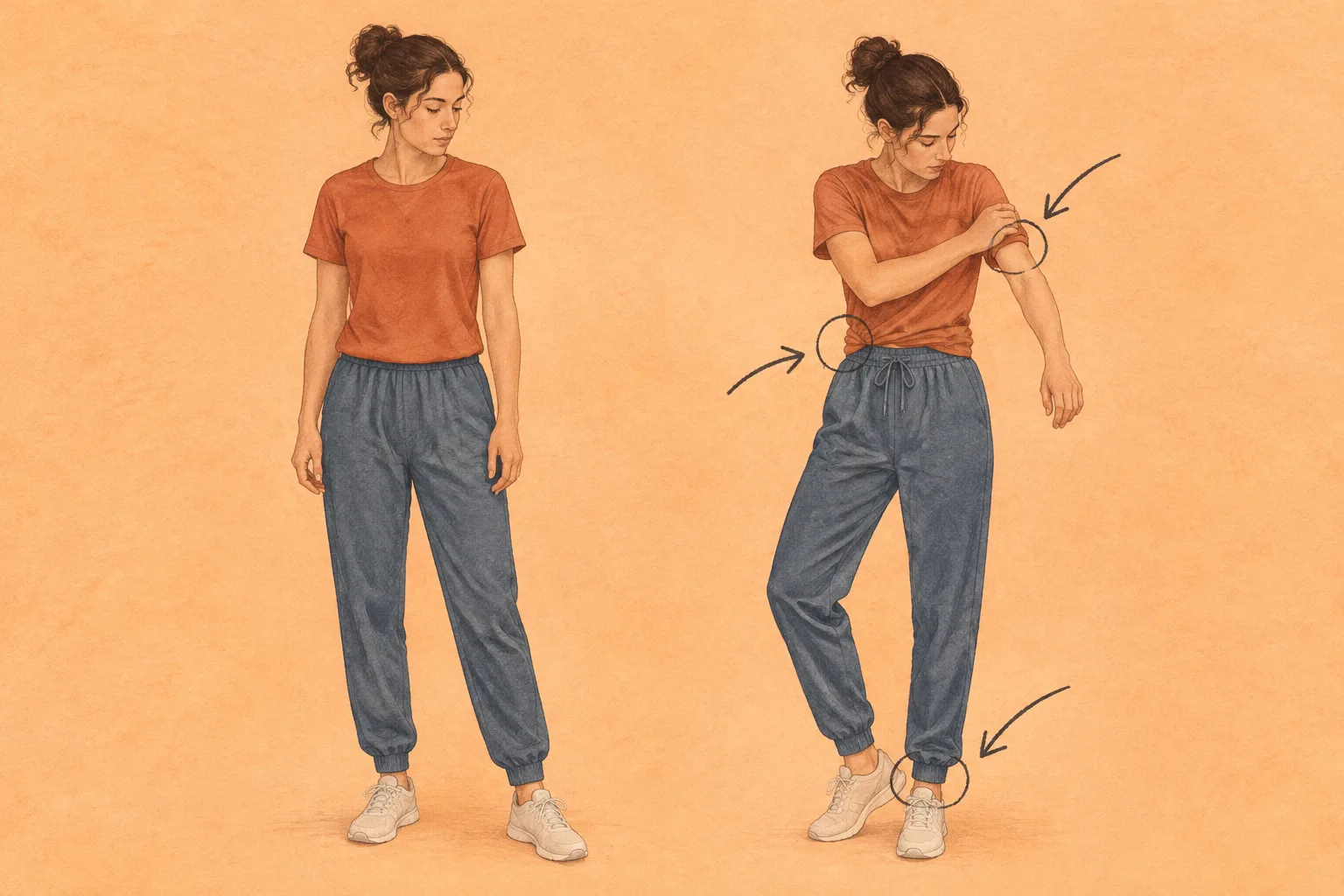
Small Moves That Take Gym Clothes to Styled
Gym clothes have a uniform problem. The same leggings, the same joggers, the same zip jacket, worn the same way, and the outfit reads as a place a person just came from rather than somewhere they are going. The fix is rarely a new wardrobe. It is a series of small moves, most of them under a minute, that change the silhouette, the texture, or the visual center of gravity of a look that already exists in the closet.
Athleisure became a default because it solves a real problem: comfort across a day that moves between the gym, the desk, and the street. That same convenience flattens an outfit into a single register. Styled gym clothes do not fight the register. They add contrast inside it, one deliberate choice at a time.
The Leggings Fit Is the Whole Foundation
Most styling failures in athletic wear start at the ankle. A legging that pools and bunches at the shoe adds visual noise that no jacket can rescue. A legging that ends cleanly, whether at the ankle bone or in a cropped cut above it, lets the shoe and the sock do their job.
The other fitting issue is the waistband. High-rise leggings worn with a cropped top create one proportion; the same leggings with a longer, looser layer create another. Neither is wrong. What fails is the middle ground: a top that ends exactly at the widest part of the hip, cutting the body into two unrelated halves. Tuck, crop, or cover. Pick one.
Compression tights, the kind meant for running, read as gear when worn alone. They read as a base layer under a structured element: a long coat, a wool overshirt, a cashmere crew. The tightness stays. The gym signal drops away.
Swap the Sock and the Shoe Before Anything Else
The fastest upgrade to a gym outfit costs less than most accessories and takes ten seconds. Replace the white athletic sock with a crew sock in a color that has nothing to do with the gym. A ribbed cotton crew in olive, burgundy, or cream adds a texture layer at the ankle that reads as intentional.
Then the shoe. Running shoes with a thick foam stack signal performance. Slip-on canvas sneakers, retro court shoes, or a low leather sneaker signal the street. The clothes do not change. The context does.
A note on the shoe-and-legging pairing: a chunkier shoe needs a shorter or tapered legging to keep the ankle visible. A slim low-profile sneaker can carry a full-length legging. Matching the two weights is the whole game.
One Structured Layer Changes the Whole Read
Soft clothes next to soft clothes produce a shapeless result. The single most reliable move in this entire category is dropping one structured piece over the athletic base. A denim jacket. A tailored blazer in a relaxed cut. A chore coat in canvas. A long wool coat in winter.
The structure provides shoulders and a hem line, and the athletic pieces underneath get recontextualized as a base rather than the whole outfit. A blazer over leggings and a plain tank works because the blazer brings the tailoring the leggings lack. The leggings bring the ease the blazer lacks. The tension between them is the point.
Length matters here. A structured layer that ends at the hip keeps the outfit casual. One that ends at mid-thigh or below lengthens the line and reads more polished. Both work, but a jacket that stops right at the waistband can make the torso look boxy, so check the mirror before leaving.
Texture Is the Cheapest Signal of Deliberateness
Technical fabrics, in their default state, share a flat matte surface. That flatness is what makes them look like workout clothes. Adding one piece with visible texture creates contrast that the eye reads as styling.
A ribbed knit tank instead of a smooth one. A waffle-knit long sleeve. A cotton sweatshirt with a looped French terry face. A brushed flannel open over a sports bra. The texture does the work of a pattern without the risk of a busy print.
This is also why an overshirt in corduroy or a cardigan in a chunky gauge works so well over a base layer of leggings and a fitted top. The eye has something to land on. The outfit stops looking like a single fabric and starts looking like a composition.
The Accessory Move Most People Skip
Jewelry on a gym outfit reads as a deliberate contradiction, and that contradiction is what makes it work. A thin gold chain over a plain black sports top. A pair of small hoop earrings with a zip hoodie. A watch with a metal band instead of a fitness tracker.
The fitness tracker is the one accessory that pulls an outfit fully back toward the gym. If a person tracks their workouts, that is fine, but the same outfit without the tracker on the wrist reads as a street outfit. A metal-banded watch, a leather strap, or nothing at all changes the register in one motion.
Bags matter just as much. A nylon gym duffel says the person is headed to a class. A small leather crossbody, a canvas tote, or a structured shoulder bag says the person is out in the world. Same clothes. Different destination.
Color: Two Tones and One Accent
The all-black gym outfit is a safe uniform and an easy way to look like a person who forgot to get dressed. Building color into the base pieces gives the outfit a starting point. Black leggings with a charcoal top and a cream overshirt. Navy joggers with a gray tee and a camel coat. Olive leggings with an oatmeal sweatshirt and a white sneaker.
The rule of thumb that holds up: two neutral tones plus one accent. The accent can be the shoe, the sock, the bag, or the layer. More than that and the outfit starts to look like it was assembled rather than worn.
Monochrome is the other strong option, and it works best when the pieces are the same color but different textures. A black legging with a black ribbed knit and a black wool coat reads as a considered outfit. A black legging with a black smooth sports top and a black zip hoodie reads as a gym kit. Same palette, different finish.
The Tuck, the Crop, and the Waistband
The relationship between the top and the waistband determines whether an athletic outfit looks styled or sloppy. Three moves work reliably. A fitted top tucked fully into a high-rise legging. A cropped top that ends above the waistband with a sliver of skin visible. A longer, looser top worn completely untucked over a fitted base.
What fails is the half-tuck executed carelessly, or a top that stops right at the hip bone with no clear intent. The waistband is the visual anchor of the outfit. It should be either fully exposed, fully covered, or cleanly framed.
A belt is optional with leggings and usually unnecessary, but with joggers or wide-leg athletic pants, a slim belt cinched at the natural waist can do the work of a structured layer by giving the outfit a defined line.
Hair, Face, and the Finish Line
The clothes can be perfectly styled and the outfit still reads as gym wear if the grooming signals a workout. A ponytail pulled tight for the treadmill, a sweaty face, and a gym bag on the shoulder complete a story the clothes cannot override.
The small move here is loosening the hair, adding a claw clip, or letting it fall naturally. A tinted lip balm and a clean face do more than most people expect. The goal is to look like a person who happens to be wearing comfortable clothes, not a person who just finished a session.
A Five-Minute Outfit Built From the Fitness Drawer
Start with black high-rise leggings, ankle length, clean at the shoe. Add a fitted ribbed tank in oatmeal, tucked in. Pull on a cream crew sock and a low leather sneaker. Throw a navy blazer over the top. Add a thin gold chain and a small leather crossbody. Loosen the hair.
Every piece in that outfit either came from a fitness drawer or could have. The leggings, the tank, and the sock are the athletic base. The blazer, the chain, the bag, and the sneaker are the styling moves. The whole thing takes less time to assemble than a ponytail and a matching set.
None of these moves require buying a new wardrobe. They require looking at the gym clothes already hanging in the closet and asking one question: what is the one piece that changes the register? A sock. A blazer. A chain. A different shoe. The answer is usually sitting in another drawer, waiting to be paired with the leggings it was never meant to meet.