
The Gentle Break-In: Getting New Sneakers Ready to Wear
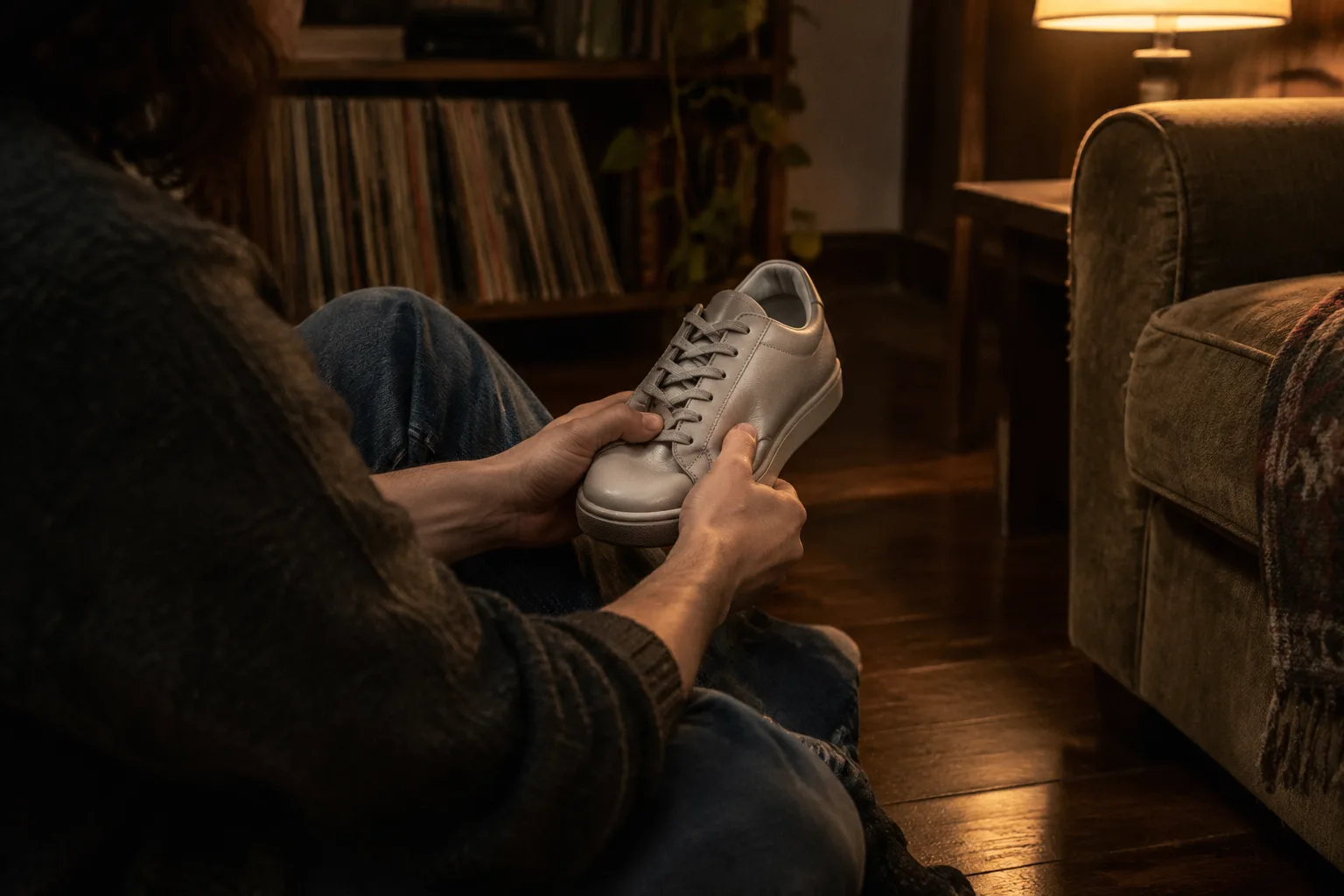
A new pair of sneakers arrives in a condition no one would call wearable. The leather is stiff as a folded card, the collar stands upright like a paper cup, and the toe box holds a crease from the shoebox that refuses to relax. The shoes look finished. They are not.
There is a useful distinction between a sneaker that has been manufactured and a sneaker that has been broken in, and the gap between the two is usually measured in days of discomfort rather than any deliberate process. Most people accept the discomfort as the price of new shoes. A smaller group, and this is the group worth joining, treats the break-in as a craft step, something done on purpose, in the evening, with a little patience and a few tools that cost almost nothing.
The gentle version of that process is the subject here. Not the brutal version, the one that involves wearing new boots on a ten-mile hike to teach them a lesson. Sneakers are softer goods. They respond to warmth, pressure, and time. They do not respond well to force, water torture, or the microwave, all of which have their own small cults online and all of which tend to end with a ruined pair and a lesson learned the hard way.
Why New Sneakers Feel Wrong Even When They Fit
The discomfort of a new sneaker rarely comes from the size. It comes from the fact that the upper, the midsole, and the outsole have never been asked to move together. A sneaker is a stack of materials glued and stitched into one unit, and each material has its own stiffness. The leather or synthetic upper wants to hold its factory shape. The foam midsole is at its thickest and least compressed. The rubber outsole is still flat and unyielding. Nothing has flexed yet.
There is also the matter of the last, the foot-shaped form the shoe was built around. Every brand uses its own last, and a last is a compromise, an average foot that fits almost no one exactly. A new pair has to be persuaded, gradually, to accept the specific shape of the foot that will wear it. That persuasion is the break-in.
The good news is that modern sneakers are built for this. The materials are designed to soften and conform, and most of them do so within a week of ordinary wear. The bad news is that ordinary wear is often the least efficient way to get there, because it happens in unpredictable bursts, often on days when the wearer has somewhere to be and no tolerance for a blister.
The First Hour: What to Do Before Leaving the House
The gentlest break-in begins indoors, before the sneakers ever meet pavement. Put them on with the socks that will actually be worn with them, because sock thickness changes the fit more than most people expect. A thin no-show sock and a cushioned crew sock can turn the same shoe from snug to tight.
Then walk. Not far, not fast. Ten minutes around the apartment, up and down a hallway, up and down stairs if there are stairs. The point is to let the shoe flex at the places it will flex in real use: the ball of the foot, the toe hinge, the heel counter. A new sneaker creases first at the toe box, and that first crease is the beginning of the shoe learning the shape of the foot.
This first session should end before any heat or pressure builds. The instinct to push through a little discomfort is strong and usually wrong. A hot spot that appears in the first ten minutes is information: it marks a place where the shoe and the foot disagree, and it will only get worse with distance.
Heat, but Not Too Much of It
Warmth is the single most effective tool for softening a stiff upper, and the safest source of warmth is the foot itself. Body heat, trapped by a thick sock, does more to relax leather and synthetic mesh than any external device. This is why the old trick of wearing new shoes around the house with heavy socks works: the sock insulates, the foot warms the lining, and the upper slowly gives.
A hairdryer held at a distance, moving constantly, can add a little heat to a stubborn toe box or heel counter. The key word is distance. Hot air held close enough to feel sharp will also soften the adhesive that holds the sole to the upper, and a sneaker that delaminates in week one is a sneaker that was overheated by its owner. Warm the shoe until it is pleasantly warm to the touch, never hot.
What should be avoided entirely is the oven, the microwave, the dryer, and the pot of boiling water. Each of these appears in break-in advice somewhere, and each of them has ruined shoes. The temperatures involved are far beyond what the materials were designed to tolerate, and the damage is often invisible until the sole peels away from the upper months later.
The Overnight Trick With Socks and Shoe Trees
The most reliable gentle method for a snug toe box is the stuffed-sock trick. Roll two or three thick socks into firm balls, push them into the toe of each sneaker, and leave them there overnight. The pressure is steady and mild, and it stretches the upper just enough to relieve the tightness that makes new shoes feel a half size small.
Shoe trees do the same job more elegantly. A cedar tree, split or solid, holds the shape of the shoe and applies gentle outward pressure at the vamp and the heel. Cedar also absorbs moisture, which matters because a new shoe worn for the first time will sweat more than an old one. The tree should fit snugly without forcing. If it takes real effort to insert, it is too large and will distort the shoe rather than relax it.
This overnight step is where most of the actual break-in happens, and it happens while the wearer sleeps. The shoe does not need to be worn to loosen. It needs to be held in a slightly expanded shape for hours at a time. Two or three nights of this will do more than a week of short walks.
Breaking In the Heel Counter Without Blisters
The heel counter is the stiffened panel at the back of the shoe, and it is the source of most new-sneaker blisters. It is built rigid on purpose, to hold the heel in place and prevent the foot from sliding, and that rigidity is exactly what rubs against the Achilles tendon before the counter has softened.
The gentle fix is to bend the counter by hand before the first wear. Press the back of the shoe inward, toward the toe, and hold it for a few seconds. Repeat a dozen times. This breaks the initial stiffness without damaging the structure. Some people also apply a thin strip of moleskin or a blister plaster to the inside of the counter on the first few wears, which costs nothing and prevents the raw, hot feeling that shows up after a mile.
Wearing the shoes with thicker socks for the first several outings is another small, effective measure. The extra layer cushions the heel and fills the small gap between foot and counter, reducing the sliding that causes friction. Once the counter has softened, the thinner socks can return.
Short Walks, Then Longer Ones
After a night or two of stuffing and a few indoor sessions, the sneakers are ready for the street, but not for a full day. The progression matters. A twenty-minute walk on the first day, a forty-minute walk on the second, an hour on the third. Each outing should end while the feet still feel fine, not after the first complaint.
This is the part most people skip, and it is the part that prevents the classic new-shoe disaster: the long first day that ends with two blisters, a sore arch, and a pair of sneakers that are then resented rather than enjoyed. The shoe is learning, and so are the feet. Both need short lessons.
A useful test after the first few walks is the flex test. Hold the shoe by the heel and the toe and bend it. A broken-in sneaker flexes easily at the ball of the foot, where the foot itself bends. A new one resists. When the flex comes easily, the shoe is ready for real distance.
What Leather, Mesh, and Knit Need Differently
Not every upper breaks in the same way, and the gentle method has to be adjusted to the material. Full-grain leather is the most rewarding and the most demanding. It starts stiff, sometimes painfully so, and it takes the longest to conform, but once it does it holds the shape of the foot better than any synthetic. Leather responds well to warmth, to cedar trees, and to a thin application of conditioner on the inside of the stiffest panels.
Mesh and engineered knit are the opposite. They arrive nearly broken in, soft and flexible from the first wear, and they need almost no work beyond a short walk and perhaps a stuffed sock overnight to ease the toe box. The risk with knit is over-stretching. A knit upper that is forced too wide will stay wide, and the shoe will lose the snug, sock-like fit that made it appealing in the first place.
Suede sits in the middle. It softens quickly but marks easily, and it dislikes water. A suede sneaker should be broken in dry, indoors, with a brush on hand to lift any nap that gets flattened during the process.
The Case Against the Bathtub and the Microwave
The internet has no shortage of aggressive break-in methods, and the two most persistent are soaking the shoes in water and heating them in a microwave. Both deserve a clear rejection. Water swells leather and weakens the adhesives that hold a sneaker together, and a shoe that has been soaked often dries out of shape, with a stiff, cracked upper and a sole that has begun to lift at the edges.
The microwave is worse. It heats unevenly, it can melt glue and foam, and it has been known to damage the shoe and the appliance. A sneaker is not a food item, and the physics of a microwave do not care about the difference between softening leather and ruining it.
The gentle methods are slower, and that is the point. Slow heat, steady pressure, short walks. The shoe softens because it is given time to soften, and the foot adapts because it is given time to adapt. Rushing the process is how a good pair of sneakers becomes a pair that sits in the closet, unworn, because the first week was miserable.
Lacing and the Small Adjustments That Change Everything
The laces are the most overlooked part of the break-in. A new sneaker laced the way it came from the box is usually laced too tightly at the top and too loosely at the bottom, which puts pressure on the instep and leaves the heel free to slide. Relacing the shoe from scratch, with the bottom eyelets snug and the top two left loose, changes the fit dramatically and costs nothing.
The heel lock, a lacing pattern that threads the lace back through the top eyelet to create a loop, is worth learning for any sneaker that slips at the heel. It holds the foot back without squeezing the instep, and it is the single most useful adjustment for a new pair that fits everywhere except the back.
An insole swap is the other quiet fix. The stock insole is often thin and flat. A slightly thicker aftermarket insole fills volume in a shoe that feels a touch large and cushions the foot in a shoe that feels a touch hard. Neither change is dramatic, and together they can make a new pair feel like a broken-in one before the first long walk.
When to Stop and When to Return
There is a limit to what gentle break-in can fix. A shoe that is genuinely too small will not stretch enough, and a shoe that pinches at the widest part of the foot will keep pinching. The break-in softens and conforms; it does not resize. If after a week of patient work the toes are still touching the front, or the arch is still complaining, the problem is the fit, not the stiffness.
The same goes for a heel that still slips after the heel lock and the thicker socks. A small amount of movement is normal and will settle as the counter softens. A heel that lifts clear of the shoe with every step is a sizing issue, and no amount of cedar trees will fix it.
Knowing the difference between a shoe that needs breaking in and a shoe that needs returning is the whole skill. The first rewards patience with a fit that feels custom. The second punishes patience with months of discomfort and a pair that never quite works.
The Pair That Ends Up Feeling Like Nothing at All
The measure of a successful break-in is not that the sneakers feel soft. It is that they stop being noticed. The heel no longer rubs, the toe box no longer presses, the lace line no longer digs, and the shoe moves with the foot so naturally that the wearer forgets it is there. That state is not the result of a single trick. It is the accumulation of small, gentle steps: an hour indoors, a night with stuffed socks, a few short walks, a relacing, and the patience to let the materials do what they were designed to do.
A pair of sneakers treated this way will last longer, too. The upper that has been allowed to soften gradually keeps its shape better than one that has been forced, and the sole that has not been overheated stays attached. The gentle break-in is not just kinder to the feet. It is kinder to the shoe.
The next time a new pair comes out of the box stiff and unyielding, the response is not to wear it for a ten-mile day and hope for the best. It is to set it on the floor, roll a few socks into the toe, and let the shoe begin its slow education. By the end of the week, the sneaker will have learned the foot, and the foot will have stopped noticing the sneaker. That is the whole goal, and it is reached one quiet evening at a time.