

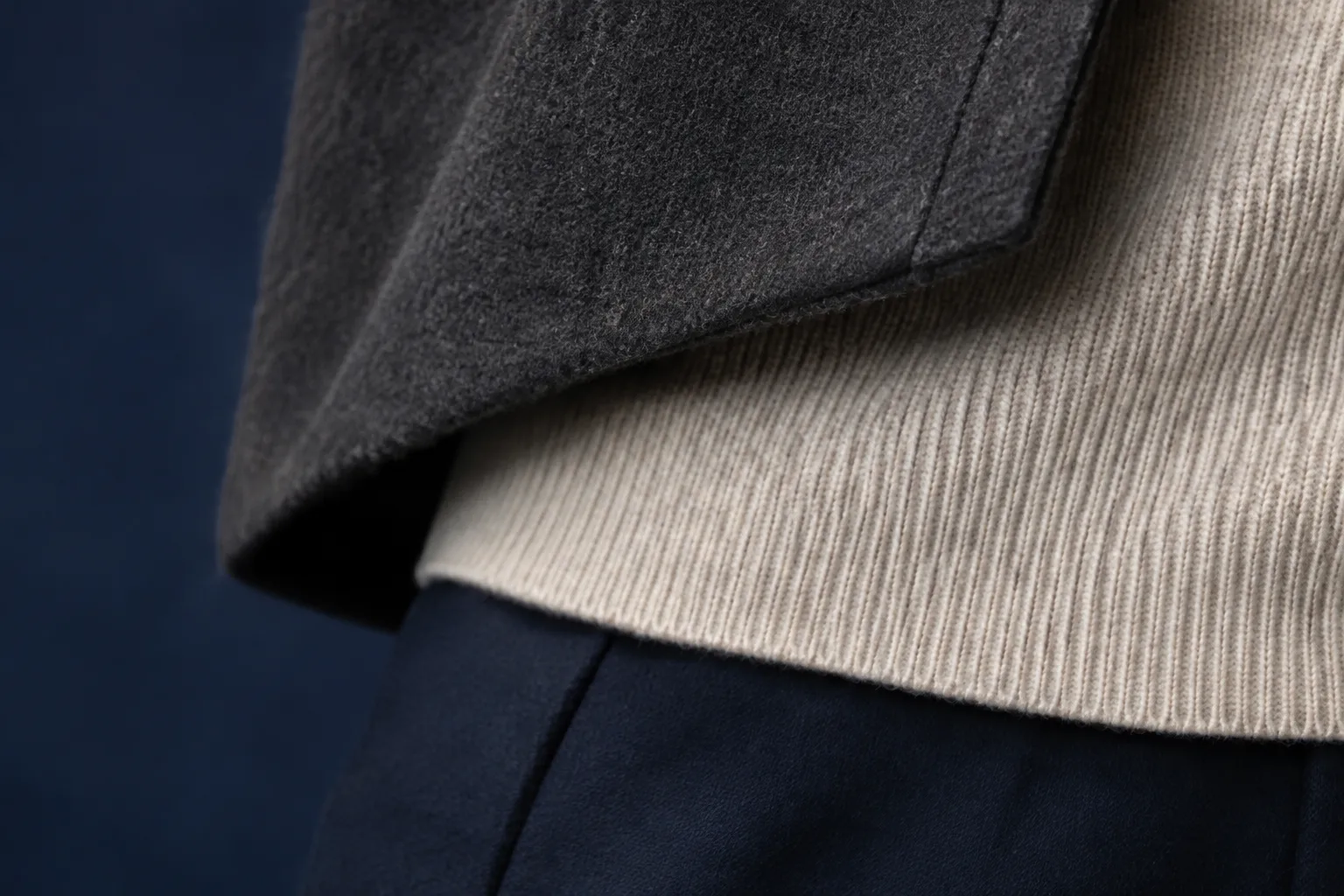
The Invisible Layer: Base Pieces That Disappear Underneath
Somewhere under a wool coat, beneath a sweater, folded against the skin, sits a garment that will never be seen by anyone the wearer passes on the street. It has no visible brand, no flattering cut, no chance at a compliment. It exists to be forgotten. And yet it determines, more than the coat or the sweater, whether the morning feels tolerable.
This is the invisible layer: the base pieces that disappear underneath everything else. A plain long-sleeve tee. A thin merino crewneck. A camisole. Thermal leggings. The parts of an outfit that do the structural work and take none of the credit, and that most people buy with about as much thought as they give to a phone charger.
That neglect is a mistake, and a costly one. The visible layers get all the attention and all the budget. The base layer gets the job of making them wearable.
The layer nobody photographs
Fashion has spent decades building an economy around what shows. Runway, street style, the entire apparatus of the outfit photo, all of it points a lens at the outer surface. The base layer is the opposite of photogenic. A gray ribbed tank top is not a statement. It is infrastructure.
Infrastructure gets ignored until it fails. A cotton tee that clings and holds sweat under a blazer will ruin a good suit faster than a bad tie. A thermal that bunches at the waist turns a clean silhouette lumpy. A camisole strap that slides off the shoulder all day makes a person irritable in a way they cannot quite name by evening.
The base layer is where comfort is won or lost before the rest of the outfit gets a vote.
Why the fabric matters more than the fit
With an outer garment, fit is the whole game. With a base layer, fiber does most of the work, and the fiber question is not complicated. Cotton absorbs moisture and holds it against the skin. Wool moves moisture away and regulates temperature across a wider band. Synthetics dry fast and can smell faster. Blends split the difference in ways that are sometimes clever and sometimes just cheap.
This is why a thin merino crewneck, at maybe 150 to 200 grams per square meter, can sit under a shirt in a heated office and under a jacket on a cold platform without either situation turning miserable. The same garment handles both because the fiber does. A cotton tee of identical cut would fail at least one of those jobs.
None of this is exotic knowledge. It is the ordinary logic of dressing, applied to the one layer most shoppers skip past on the way to the coat.
The seam that ruins a good shirt
Construction details on a base layer are almost invisible and almost always decisive. A flatlock seam lies flush and does not rub under a strap or a pack. An overlocked seam adds a ridge that a person will feel by mid-afternoon. A wide, soft waistband on thermal leggings stays put; a narrow elastic one rolls and digs.
The collar is its own small drama. A crewneck that sits too high peeks above a shirt collar and reads as an accident. One that sits too low vanishes under a v-neck and leaves a gap of bare chest in cold weather. The correct depth is a matter of a centimeter or two, and most cheap base layers get it wrong.
These are the details that separate a base layer a person forgets they are wearing from one they are conscious of all day.
The undershirt's long, quiet history
The base layer has a pedigree that its current reputation does not reflect. The men's undershirt was once a garment of real social weight, a marker of respectability, the thing a man was expected to wear so his shirt would not show his body. The union suit, that unlovely one-piece, kept people warm through winters before central heating was common.
What changed was indoor climate and fabric technology. Once buildings were heated and cooled, and once fabrics could be engineered, the base layer lost its compulsory status and became optional. Optional things get neglected. The category that once protected modesty and warmth became an afterthought sold in multipacks.
The neglect is recent, and it is not a verdict on the garment's usefulness.
The seasonal math of one thin tee
A single well-chosen base layer can replace a surprising amount of wardrobe. A thin merino tee worn under a shirt extends that shirt into cooler months. The same tee worn alone on a warm day works because wool breathes. Layered under a sweater in winter, it adds warmth without bulk. One garment, three seasons, and the outfit around it gets more use.
This is the quiet economics of the invisible layer. The visible pieces are expensive and get worn a fraction of the time because they only work in a narrow band of conditions. The base layer widens that band. A wool coat that is too warm for a mild day becomes wearable with a lighter base underneath. A summer dress stretches into autumn with a thin layer below.
The base layer does not add a look. It adds range to the looks already owned.
When the hidden layer becomes the problem
The failure mode is easy to spot in hindsight. A person buys an expensive coat, wears it over a cotton tee, sweats on the commute, and blames the coat. The coat is fine. The tee trapped the moisture. Or a person layers a bulky thermal under slim trousers, and the whole silhouette goes wrong at the knee, and the trousers get blamed.
Base layers fail quietly and get other garments convicted for the crime. The fix is almost always cheaper than replacing the visible piece: swap the tee, change the thermal, adjust the weight. The outer layers were never the issue.
This is the argument for spending real attention down here. A thirty-dollar merino tee can rescue a three-hundred-dollar coat. The reverse almost never happens.
What to actually look for in a base piece
The criteria are few and specific. Fiber first: merino or a merino blend for temperature range, silk for warmth without weight, a good technical synthetic for activity. Fit second: close to the body without compression, long enough to stay tucked, short enough not to bunch. Construction third: flat seams, a waistband that holds, a collar depth that suits the shirts it will live under.
Color is the last decision and the easiest. Neutral tones disappear under everything: black, gray, oatmeal, navy, a soft white. A base layer in a loud print is a base layer that limits what can go over it. The point of the garment is to be invisible, and the color should serve that.
Quantity matters less than quality here. Three good base pieces, rotated, will outlast a drawer of cheap ones and cause fewer bad mornings.
The garment that decides how the day feels
By evening, the coat is on a hook and the sweater is in a pile, and the base layer is the thing that spent fourteen hours against the skin. It absorbed the sweat from the walk to the station. It held the warmth in the cold office. It did not itch, roll, bunch, or show. Nobody saw it, and it did its job.
The next time a person stands in front of a closet and reaches for the visible layer first, the invisible one deserves a second look. It is the piece that will decide whether the outfit works, and it is the piece almost everyone forgets to buy well. The coat gets the compliment. The base layer gets the day.