

What Quality Activewear Actually Asks of You
Activewear has spent fifteen years borrowing the language of self-improvement. The marketing promises ease, performance, a body that finally cooperates. The garment itself asks something blunter. It asks the wearer to be honest about how the body moves, what the skin tolerates, and where the eight-hour seam will land.
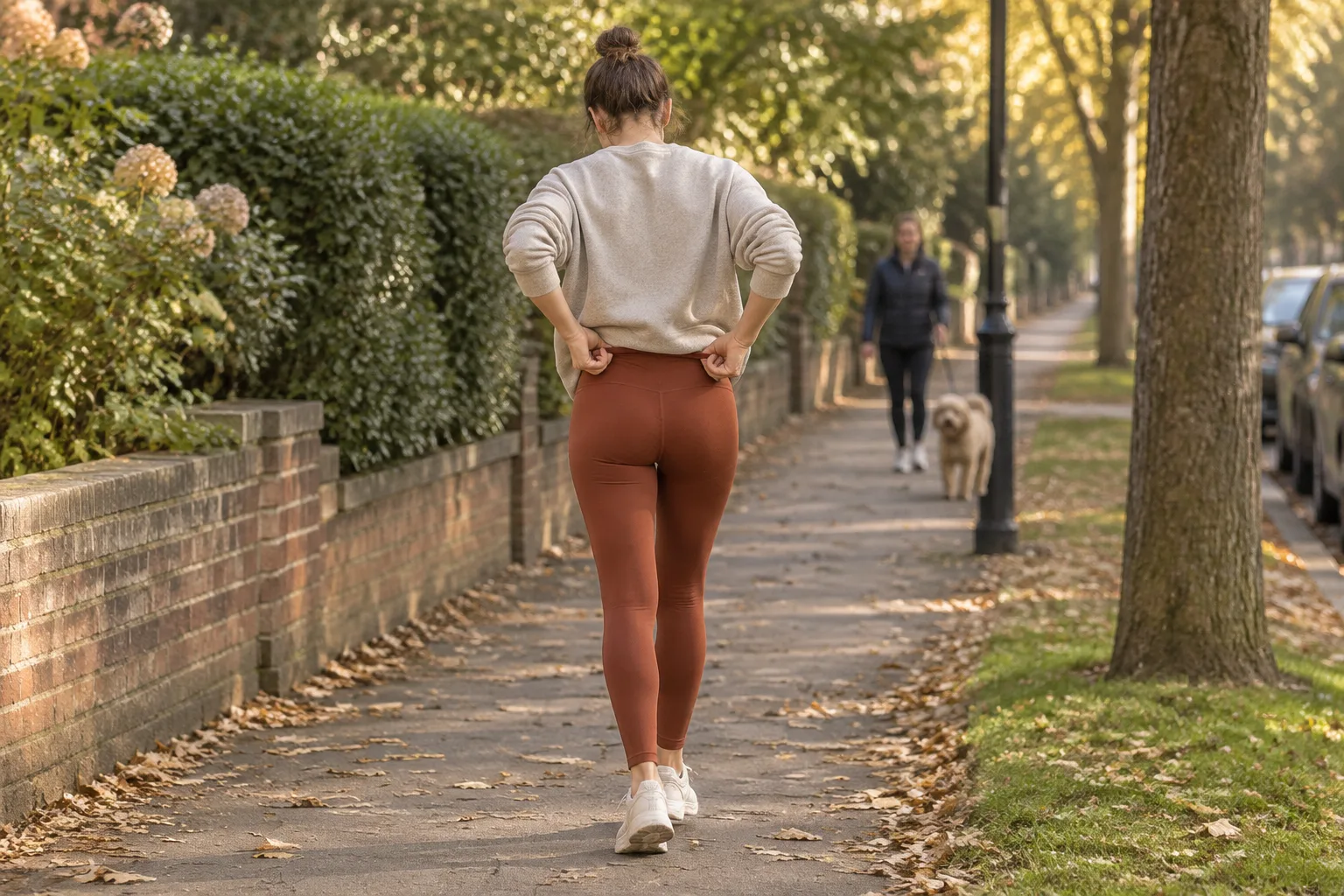
Most athletic clothing fails quietly. A pair of leggings that stays put for a forty-minute run turns traitorous on an hour's walk, riding down at the waist, bunching behind the knee, holding sweat against the small of the back until the walk becomes a negotiation. Nothing dramatic happens. The person simply adjusts, tugs, and forgets the garment was supposed to disappear.
Quality in this category is often described as fabric. Fabric matters, but quality is really an agreement between a garment and a body over time. The better the agreement, the less either party notices.
The Seam That Decides Everything
Flatlock stitching looks identical on a rack: a row of neat parallel lines, no exposed thread ends, a hem that lies flat. The difference emerges at the joint. A flatlock seam that sandwiches a small ridge across the shoulder or the inner thigh will announce itself at kilometer two. A well-made one sits flush against the skin and stays there through a full range of motion.
This is why serious activewear is tested on bodies in motion, not on mannequins. A seam that passes inspection on a hanger can still bite at the shoulder blade when the arm reaches overhead. The wearer discovers this on a climbing wall or in the middle of a vinyasa class, not in a fitting room. The garment has asked a question the fitting room could not answer.
Look for seams that follow the shape of the muscle rather than cutting across it. Gusseted construction in the crotch removes the single most common complaint about tight athletic bottoms. A raglan or articulated sleeve does the same for the shoulder. These details cost more to produce and are the first thing a cheap line eliminates.
Fabric Weight and the Idea of Coverage
Fabric weight, usually expressed in grams per square meter, is a useful number that few shoppers consult. A light jersey at around 150 grams feels airy and disappears under a shirt, but it will cling, show every contour, and turn translucent under stretch. Something closer to 220 to 260 grams holds its shape, resists shadow, and drapes with enough body to flatter rather than reveal.
Heavier is not automatically better. A squat-proof legging in the 300-gram range can feel like a wetsuit on a warm day. The right weight depends on the activity and the climate, and the honest garment will state it. Brands that publish fabric weight are usually brands that have thought about the question.
The related ask is opacity. A fabric that turns see-through under a deep squat has failed a basic test, and no amount of stretch or softness compensates. The person wearing it will spend the entire session thinking about the fabric instead of the movement. That mental load is the real cost of a poorly chosen weight.
What Four-Way Stretch Actually Requires
Elastane content is the number on the label that most people ignore. A fabric with 5 percent elastane will stretch in four directions and recover most of its shape after a wash. One with 15 percent or more feels almost liquid against the skin and recovers aggressively, which is why compression garments lean on it. The trade-off is durability: high-stretch blends tend to pill, thin, and lose their snap sooner.
Recovery is the quality worth paying for. A garment that stretches to accommodate a lunge and then springs back to its original dimensions will hold its fit for years. One that stretches and stays stretched becomes a loose sack within a season. The wearer notices this as a waistband that no longer stays up, a knee that bags, a shoulder that sags. These are fabric failures that read as fit failures.
The ask here is patience with the garment's own memory. Washing in cold water and skipping the dryer preserves elastane, which degrades quickly under heat. A person who treats a good pair of leggings like a delicate knit will get three or four years out of them instead of eight months.
The Waistband as a Structural Promise
Waistbands are where cheap activewear reveals itself fastest. A wide elastic band sewn into a narrow casing will roll, dig, and migrate south during any activity that involves bending. A contoured waistband that is higher in the back than the front stays put because it follows the shape of the pelvis instead of fighting it.
The better construction uses a bonded or knit-in waistband with no elastic at all, relying on the fabric's own stretch and a carefully placed seam to hold tension. These feel strange on first wear, almost too soft, and then vanish. The wearer stops thinking about the waistband entirely, which is the point.
Drawstrings are a confession. A garment that needs a drawstring to stay up has not solved its own fit problem. They have their place in loose shorts and swimwear, but a legging that requires a knot to function is telling the buyer something about the pattern.
Moisture, Odor, and the Honest Fiber
Polyester moves sweat away from the skin and dries fast. It also holds odor in a way that cotton does not, because the oil and bacteria that cause smell cling to the synthetic fiber and survive a cold wash. Merino wool resists odor naturally and regulates temperature across a wider range, which is why it costs more and why long-distance runners and hikers keep coming back to it.
The honest answer for most people is a blend. A polyester-spandex base layer for high-sweat sessions, a merino or merino-blend piece for cooler weather and multi-day wear. The garment asks the wearer to match the fiber to the effort, and to wash synthetics promptly rather than letting them sit in a bag overnight.
Anti-odor treatments exist and vary wildly in quality. Some are durable silver-based finishes that survive dozens of washes; others are topical sprays that rinse away after two. A brand that explains which one it uses, and how long it lasts, is worth listening to.
Fit Is a Range, Not a Size
Sizing charts assume a body is a set of measurements. A body in motion is a changing volume: the ribcage expands, the hips rotate, the shoulders roll forward. Quality activewear is cut with this range in mind, adding ease at the joints and tapering at the waist so the garment accommodates movement without swimming.
A sports bra is the clearest test. The band should sit snug against the ribcage and stay level when the arms lift overhead. The straps should not dig into the trapezius. The cups should contain the breast tissue without compression that restricts breathing. Most people wear a band too loose and cups too small, and the resulting garment fails at the first jump.
The ask is a fitting that involves movement. Jump, reach, squat, twist. If the garment shifts, gaps, or pinches during any of these, it will do so again under load. A fitting room mirror shows a static body; the garment is built for the other kind.
Pilling, Abrasion, and the Long Middle of a Garment's Life
Pilling is the small death of a synthetic garment. Short fibers work loose under friction and ball up on the surface, and once a fabric starts to pill it rarely recovers. The cause is usually a combination of low-quality staple fiber, a loose knit, and the abrasion of daily wear against a bag strap, a car seat, or the opposite thigh.
Higher-quality knits use longer staple fibers and tighter construction, which delays pilling by years rather than months. The trade-off is a stiffer hand-feel on first wear that softens with washing. A garment that feels impossibly soft on the rack is often the one that pills by the third month.
Abrasion resistance is harder to judge in a store. The best proxy is the fabric's weight and the tightness of the knit, visible as a dense, opaque surface rather than a loose, slightly sheer one. Hold the fabric up to the light. If fingers show through, the garment will wear through faster than the label suggests.
The Care Instructions Are Part of the Product
A care label that reads "machine wash cold, line dry" is a garment with a long life ahead of it. One that reads "hand wash, do not wring, dry flat" is asking for a level of attention most people cannot sustain, and the manufacturer knows it. The label is a contract, and a realistic contract is a sign the brand has thought past the point of sale.
The single most destructive habit in activewear care is the dryer. Heat breaks down elastane, shrinks natural fibers, and accelerates pilling on synthetics. A garment air-dried on a rack will outlast an identical one tumbled on low by years. The wearer who hangs the leggings over a chair back instead of tossing them in the machine has already extended their useful life by half.
Zippers and hook-and-loop closures deserve their own attention. A rough hook-and-loop tab left open in the wash will snag every other garment in the load. Zipping them closed and turning the garment inside out is a ten-second habit that preserves the surface of everything in the drum.
What the Price Tag Is Really Comparing
A fifty-dollar legging and a hundred-and-fifty-dollar legging can look identical on a hanger. The difference is spread across invisible decisions: the staple length of the yarn, the number of stitches per inch, the quality of the elastane, the presence of a gusset, the testing done on actual bodies in motion. None of these show up in a photograph.
The higher-priced garment is not always better. Some premium brands charge for branding and story rather than construction, and some mid-priced lines quietly match the expensive ones on every structural point. The way to tell is to read the spec sheet, feel the fabric weight, check the seams, and look for the details that do not photograph well: flatlock stitching, gussets, contoured waistbands, bonded edges.
The garment that passes those checks will ask less of its wearer over time. It will not demand constant adjustment. It will not require a specific wash cycle to avoid disaster. It will hold its shape through a hundred sessions and still fit the way it did in the first week. The person who owns it will forget it exists, which is the highest compliment activewear can receive.