

Why Your Activewear Still Looks Like Gym Clothes
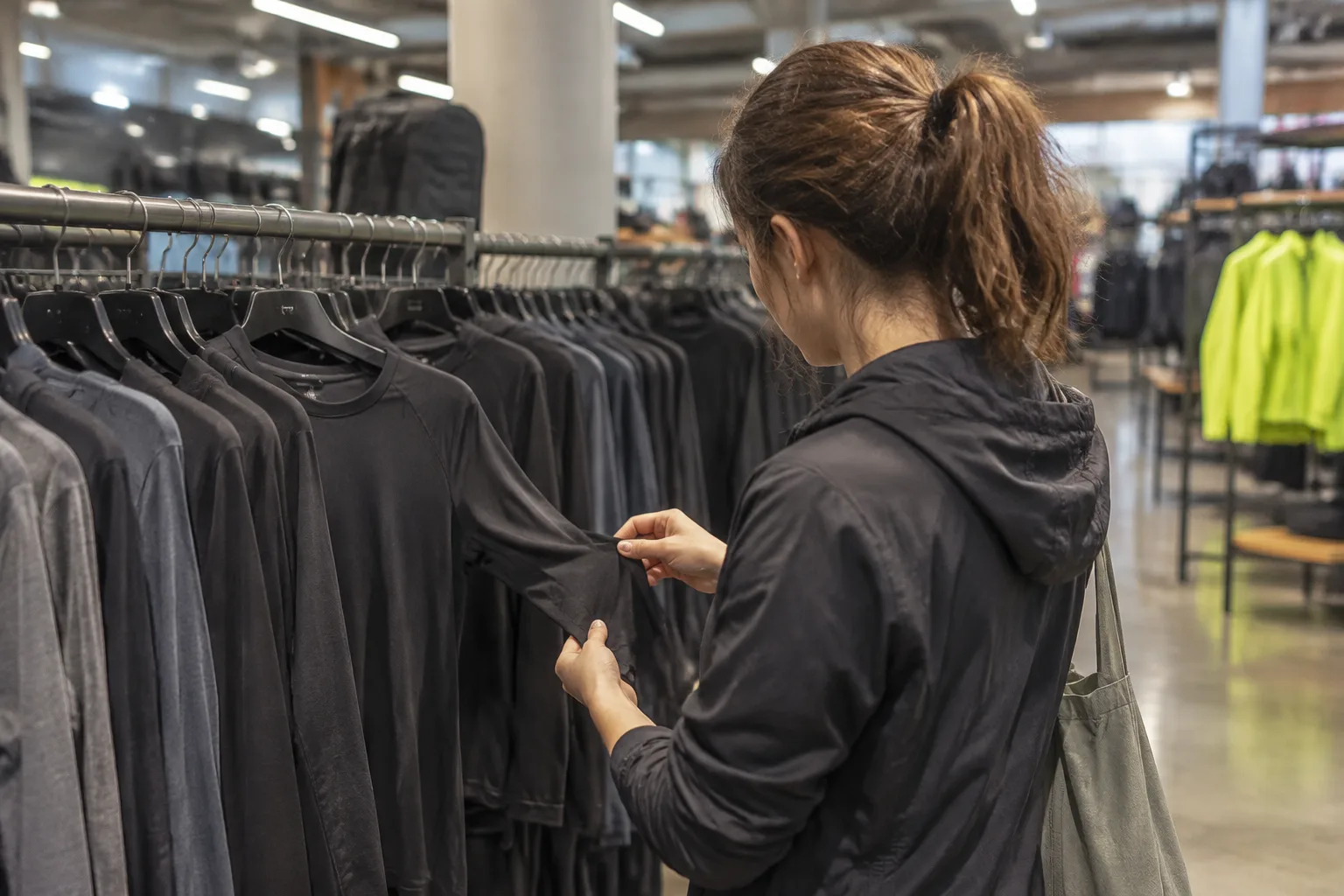
Walk through the fitness apparel section of any large sporting goods store and a pattern emerges fast. The leggings are black or charcoal. The tops are black or charcoal. There might be a rack of neon from a brand chasing a seasonal drop, and a few pastel pieces that look like they wandered in from a different decade. The cuts are functional, the fabrics are technical, and the whole wall reads as one thing: clothing for a workout, waiting to be taken off.
That wall is where the problem starts. Activewear has spent two decades perfecting the engineering of performance, and almost none of that engineering was designed to survive the walk from the gym to a coffee shop at 9 a.m. The pieces perform beautifully inside a studio and look like they escaped from one the moment they leave.
The gap is not about quality. It is about context. A garment built for movement, sweat, and stretch is doing a different job than a garment built for the street, and the industry has mostly asked one piece of clothing to do both without designing for the second job at all.
The engineering brief that never mentions the street
Ask what makes a good pair of training leggings and the answer is a list of performance specs. Four-way stretch. Squat-proof opacity. Flatlock seams that do not chafe. A waistband that stays put during a burpee. Fabric that wicks moisture and dries in minutes. Every one of those requirements is real and worth solving.
Notice what is missing from the list. Nothing about how the fabric catches light on a sidewalk. Nothing about whether the seam lines read as athletic or accidental when seen from three feet away in daylight. Nothing about the waistband height relative to a normal shirt hem, or how the ankle opening sits over a sneaker that is not a running shoe.
Performance clothing is engineered against a very specific environment: a climate-controlled room, a mirror, a defined time window. Street clothing is engineered against ambiguity. It has to work in a car, at a desk, in a queue, under a jacket, in a photograph. Those are different problems, and solving the first one well can actively make the second one worse.
Why compression fabric photographs like a uniform
The single biggest reason activewear looks like gym clothes is the fabric itself. High-stretch knits with a high elastane content behave optically like a second skin. They cling, they reflect light unevenly, and they reveal every contour of the body underneath. On a moving body in a gym, that is a feature. On a standing body in a shop queue, it reads as underwear worn in public.
Compare a good street trouser. Wool, cotton twill, even a decent ponte knit: these fabrics have structure. They hang from the hip rather than gripping it. They create a silhouette through drape, not through tension. A leg in a wool trouser looks like a leg inside a garment. A leg in compression fabric looks like a leg with a logo on it.
There is a reason for this beyond aesthetics. Compression fabric is designed to manage moisture and support muscle, which means it has to sit tight against the skin. Any looseness defeats the purpose. But tightness is exactly what makes clothing read as athletic rather than civilian. The garment cannot help it. The brief demanded it.
The seam lines that give it away from across the street
Look at the seams on a pair of gym leggings and a pair of tailored trousers side by side. The leggings have curved, contoured seams that follow the muscle groups, often wrapping around the thigh or sweeping up the hip. Those curves exist to reduce chafing and allow stretch. They also draw the eye in a way that street clothing almost never does.
Tailored clothing hides its construction. Seams are pressed flat, placed at the side or back, and finished so they disappear into the line of the garment. The goal is a clean silhouette. Athletic seams do the opposite: they advertise the engineering. A curved seam across the glute is a performance feature. It is also a visual signal that says "I came from a workout" louder than any logo.
Then there are the details that finish the job. Flatlock stitching. Reflective strips. Mesh panels behind the knee. A drawcord at the waist. Each one is there for a reason inside the gym, and each one drags the garment back toward the locker room when it steps outside.
The sneaker problem nobody plans for
Activewear is usually designed around athletic footwear, and athletic footwear has grown strange. Running shoes now have stack heights that would have looked like platform boots a decade ago. Training shoes have aggressive treads and stiff plates. The proportions are exaggerated because the shoes are built for a specific motion, not for walking down a high street.
Put a tapered legging over a max-cushion running shoe and the ankle looks pinched, the foot looks enormous, and the whole lower half reads as a single athletic unit. Swap in a low-profile leather sneaker or a loafer and the same legging suddenly looks underdressed, because the fabric and cut were never meant to meet a shoe with a leather upper.
This is the quiet trap. People buy activewear, then buy athletic shoes to go with it, then wonder why the outfit looks like a warm-up. The footwear is following the clothing's lead. A legging forces an athletic shoe. An athletic shoe forces an athletic look. The loop closes and the wearer never gets out of it.
What the brands actually sell: a lifestyle, not a wardrobe
Activewear brands know exactly what they are doing. The marketing is built on aspiration, and the aspiration is rarely just fitness. It is the morning run, the reformer class, the cold plunge, the smoothie, the whole performance identity packaged as a way of life. The clothing is the uniform of that identity, and the identity is deliberately sealed off from ordinary dressing.
That is why the palette stays narrow. Black, grey, navy, a few muted earth tones. Those colors signal seriousness and function. They also make the pieces interchangeable, which suits a brand selling a system rather than a wardrobe. A person can buy five identical black leggings and feel outfitted. A person cannot buy five identical black leggings and feel dressed for a dinner.
The limited palette is efficient for the brand and limiting for the wearer. It removes the decision-making that real clothing requires, and it flattens the visual range of the outfit to a single note. The result is that activewear rarely clashes with itself, and it rarely complements anything else either.
The athleisure promise and where it quietly failed
Athleisure was supposed to solve this. The pitch was clothing that moved between the studio and the street without changing. For a while it worked, mostly because the bar was low: a clean legging and a fitted top looked acceptable in a casual cafe. Then the category split. Performance activewear went harder into technical fabric and sport-specific cuts. Fashion went toward looser, softer, more structured pieces that borrowed the comfort of activewear without the athletic signaling.
The middle collapsed, and most shoppers ended up on the performance side because that is where the marketing budget went. They bought clothing optimized for a workout and then wore it to brunch, and the clothing kept doing its job: it kept looking like it belonged in a workout.
The failure was one of translation. Nobody built the bridge garment, the piece that keeps the comfort and stretch of activewear but adopts the drape, proportion, and finish of street clothing. A few brands have tried. Most have treated it as a colorway exercise: take the gym legging, dye it olive, call it lifestyle. The seams are still curved. The fabric still clings. The olive does not save it.
The pieces that do cross over, and what they share
There are garments that manage the crossing, and studying them reveals the pattern. A heavyweight cotton sweatshirt in a boxy cut reads as streetwear because the fabric has body and the shoulder seam sits where a shirt shoulder sits. A straight-leg ponte trouser reads as smart casual because the fabric has weight and the leg falls straight instead of tapering to the ankle.
What these pieces share is structure. They resist the body rather than tracing it. They have hems and cuffs that hold a shape. They use seams as construction rather than as contouring. And they tend to come in fabrics with a matte surface, because shine is the fastest way to make any garment look athletic.
A useful test before buying: hold the piece up against a pair of jeans and a pair of gym shorts. If it looks at home with the shorts and strange with the jeans, it is gym clothing no matter what the label calls it. If it sits comfortably between the two, it has a chance of crossing over.
The styling habits that keep the gym look locked in
Even a crossover piece fails when it is styled like activewear. The habits are small and consistent. A tight top tucked into a high-waist legging. A cropped hoodie over a matching set. A crossbody bag worn high across the chest. White running shoes with visible cushioning. A smartwatch on the wrist and a claw clip in the hair.
None of these choices is wrong on its own. Together they form a uniform, and the uniform overrides the individual garments. A person can wear the most beautifully cut ponte trouser in the world, but pair it with a cropped sports top and a running shoe and the eye reads gym. The styling is doing more work than the clothing.
The fix is usually one or two swaps. A longer shirt hem over the waistband. A structured jacket over the top. A flat leather shoe instead of a trainer. A tote instead of a gym bag. Small changes, but they break the uniform and let the garment be seen as clothing rather than kit.
A short list of what to look for instead
For anyone trying to build a wardrobe that keeps the comfort of activewear without the gym signaling, the criteria are concrete. Look for fabric with weight: ponte, heavy jersey, compact cotton, technical knits with a matte finish. Look for straight or wide legs rather than tapered ones. Look for seams at the side rather than curving across the body.
Check the waistband. A flat, wide waistband that sits at the natural waist reads as trouser. A high, compressive band that grips the midsection reads as legging. Check the hem. A finished hem with a bit of structure reads as street. A raw or bonded hem that hugs the ankle reads as athletic.
And check the color range. A piece that only comes in black and grey is probably designed to be part of a kit. A piece that comes in black, grey, olive, navy, cream, and a couple of seasonal tones is more likely to have been designed as clothing that happens to be comfortable.
The moment the outfit stops being a costume
The tell that an outfit has crossed over is simple. Nobody asks where the person is coming from. The clothing stops announcing an activity and starts being the thing worn while doing nothing in particular. That is the whole difference, and it has almost nothing to do with price or brand.
A pair of straight ponte trousers, a heavyweight tee, and a flat leather shoe will read as a person going about a day. The same person in a tapered legging, a cropped sports top, and a running shoe will read as a person between two workouts. The comfort can be identical. The signal is not.
Activewear looks like gym clothes because it was built to, seam by seam and fiber by fiber. The way out is not to abandon comfort. It is to pay attention to the handful of construction details that decide whether a garment reads as clothing or as equipment, and to stop letting the athletic shoe and the cropped top make the decision first. The legging is not the problem. The brief behind it is.